See the work.
Enter your email to view the presentation.
Filmmaking, unbound.
OneDay at a glance.
OneDay is a director-led studio working where craft, filmmaking and emerging technology meet. At our core we are storytellers - emotional truth leads and the technology serves the idea. London-based and represented by Arts & Sciences, we work with brands, studios and agencies as a creative partner: a fully integrated studio covering every aspect of hybrid and AI production. Recent work includes a six-spot global campaign for Booking.com and a proof of concept for a major Hollywood studio, and we made Luma AI's entry to the inaugural Cannes AI Craft Lion, with legendary creatives Jason Kreher, Hal Davis and Chuck McBride.
commercials and Hollywood studios





What's inside.
Our passion for filmmaking is why OneDay exists.
We grew up obsessing over a single frame, a piece of music against a cut, the way light falls on a face at the exact right moment. For a long time the stories we wanted to tell were too big for the budget, too cinematic for what the tools could deliver. Then the tools caught up with our imagination.
“AI is not scary. The need for an idea, for story, for experience to curate and guide, to make choices, that remains.”
Filmmakers first.
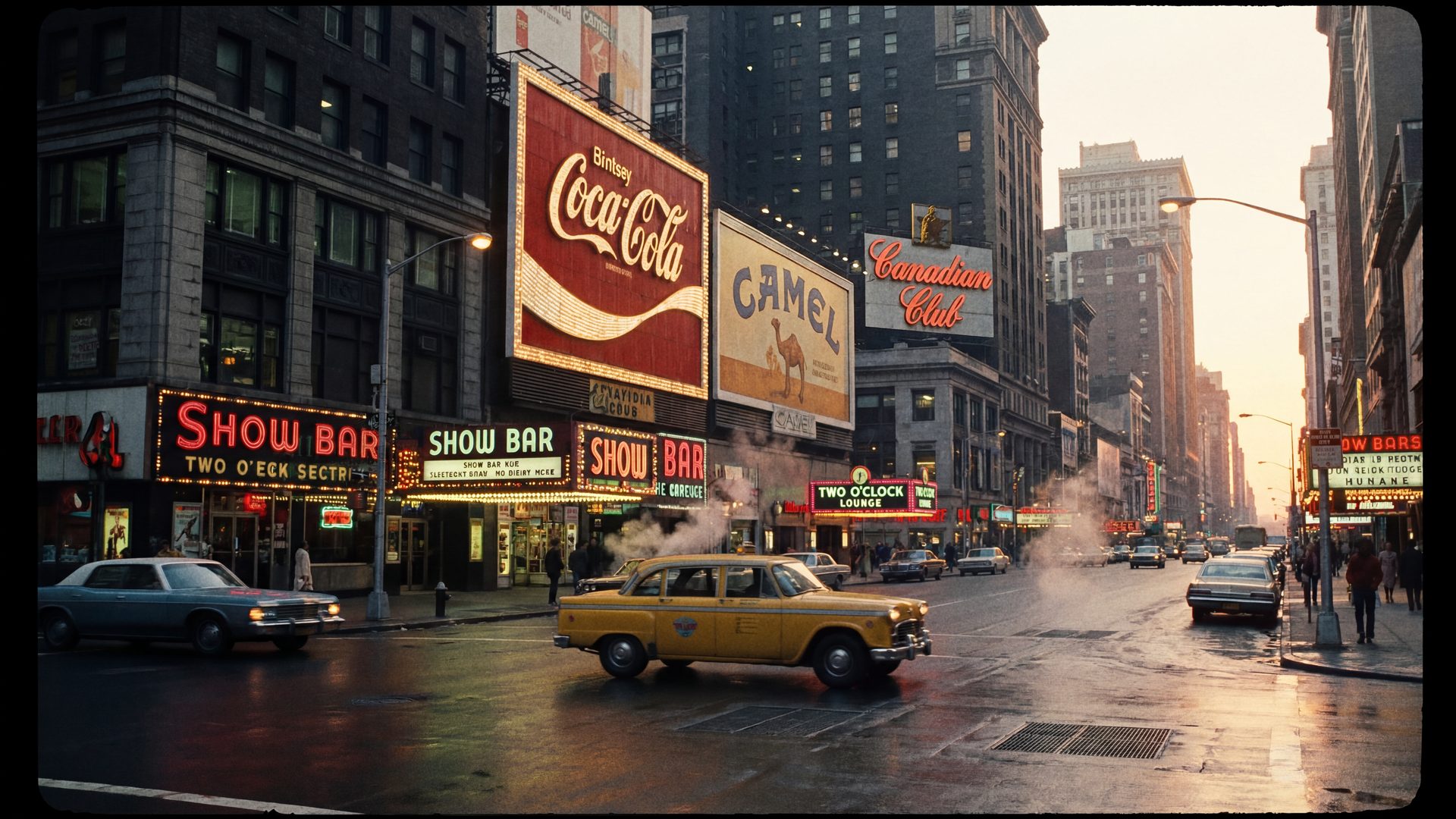
Award-winning directors.
Every OneDay film is led by directors with real, awarded careers, people who adopted the tools, not the other way around. The names behind the work are the reason clients trust it.
Cinematographer instinct.
Lens, light and depth, every output is directed like a DP would shape it on set. Generation and post follow the same cinematographic logic as a live shoot.
Craft at every stage.
Considered, cohesive, intentional, frame by frame. The same values run through the whole process, from script to final delivery.
Audit-grade records.
Ethical AI is built into the workflow, your data stays yours, and there's a record behind every shot we deliver.
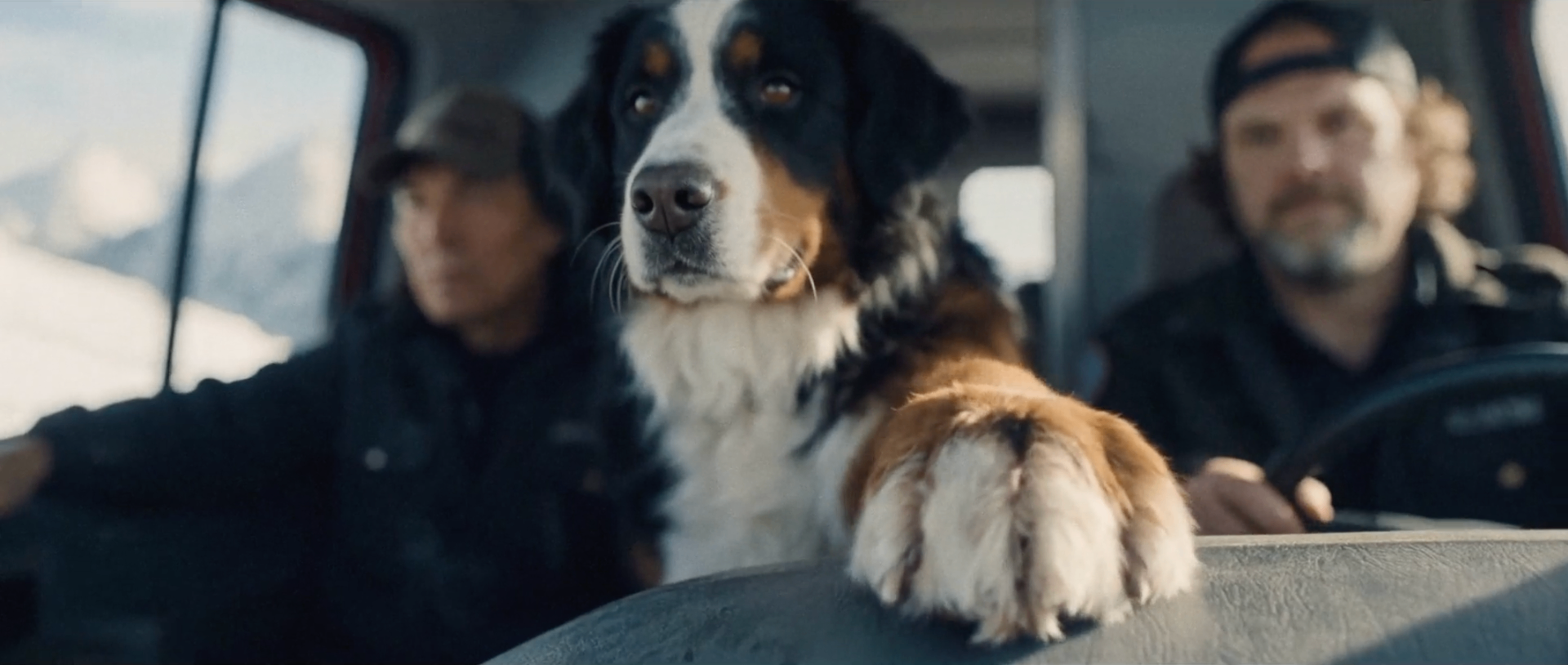
Enhance.
Not replace.
AI is our most powerful production tool, the way colour grading, motion-control and VFX changed filmmaking before it. It speeds exploration, opens possibilities budgets couldn't reach, and carries the heavy lifting in post. The creative decisions, the eye, the taste, that stays human. It is unique and it is irreplaceable.
What we stand for.

Three ways we work.
Human magic meets craft at scale.
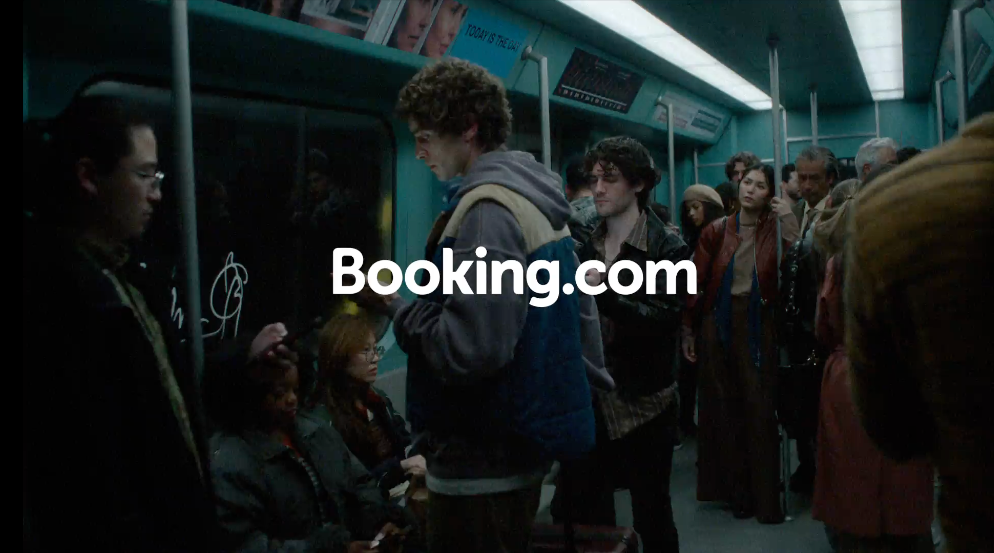
Booking.com came to Arts & Sciences with a question, not a brief, keep the human truth the brand is built on, and use AI as the creative unlock.
Which parts were live action?
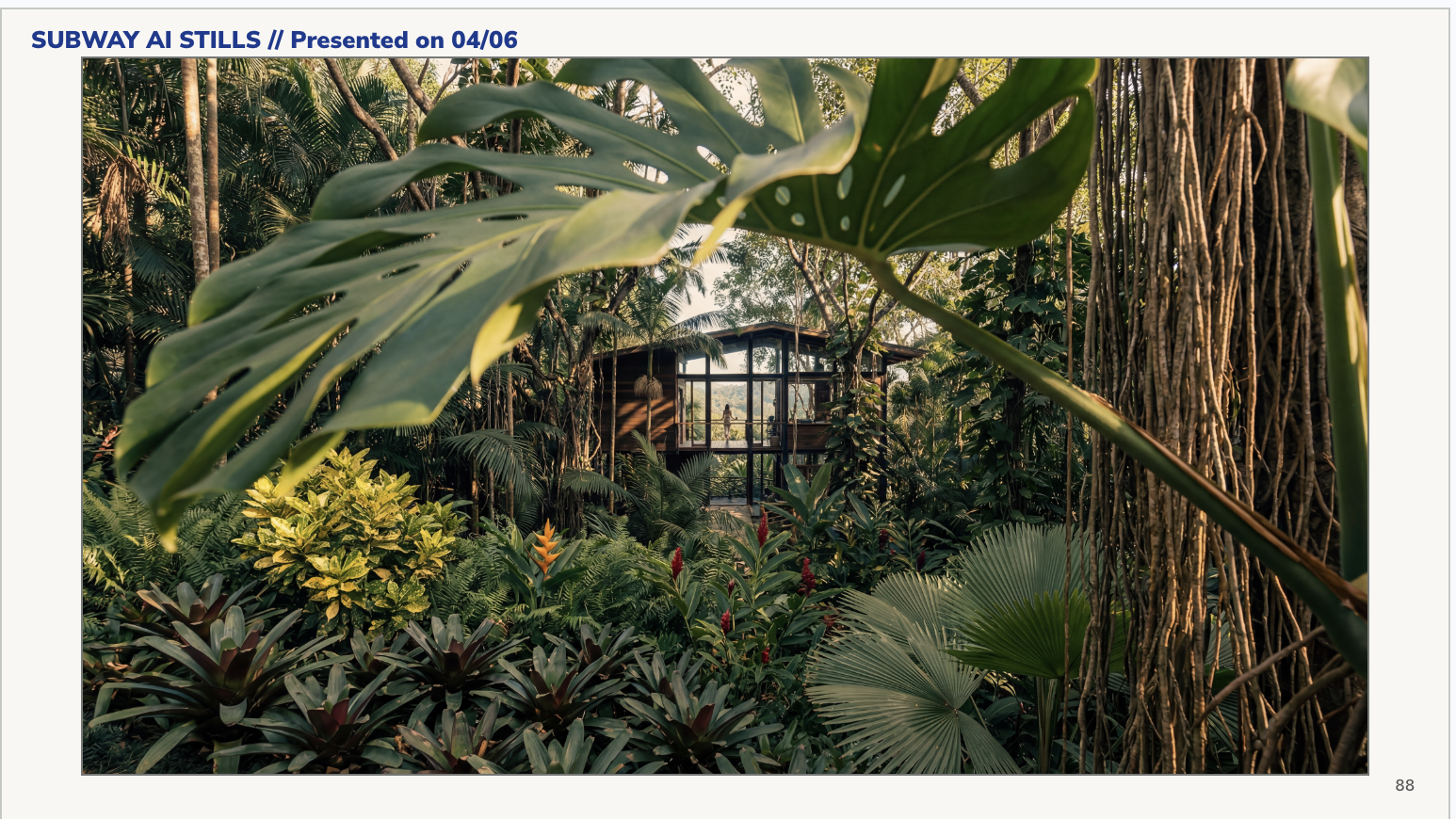
The performances are 100% live action, Fiona McGee shot the cast on camera exactly as she would a conventional commercial. Everything around them, the destinations, environments and set extensions, was generated with AI and matched shot-for-shot to the physical shoot, so the two blend into a single world.
How did you work with the actors?
Actors first. Fiona's opening concern was protecting performance and likeness, so we shot real performances on camera and only ever used an actor's likeness in scenes and ways they had approved.
The human performance is captured for real; AI builds the world around it.
Why do AI at all?
Because the brief was global. Booking.com needed elements that live beyond a single shoot and re-version as the campaign travels market to market, on a timeline real destination shoots across the world could never meet. AI let one production scale to many destinations without losing the human truth at its center.
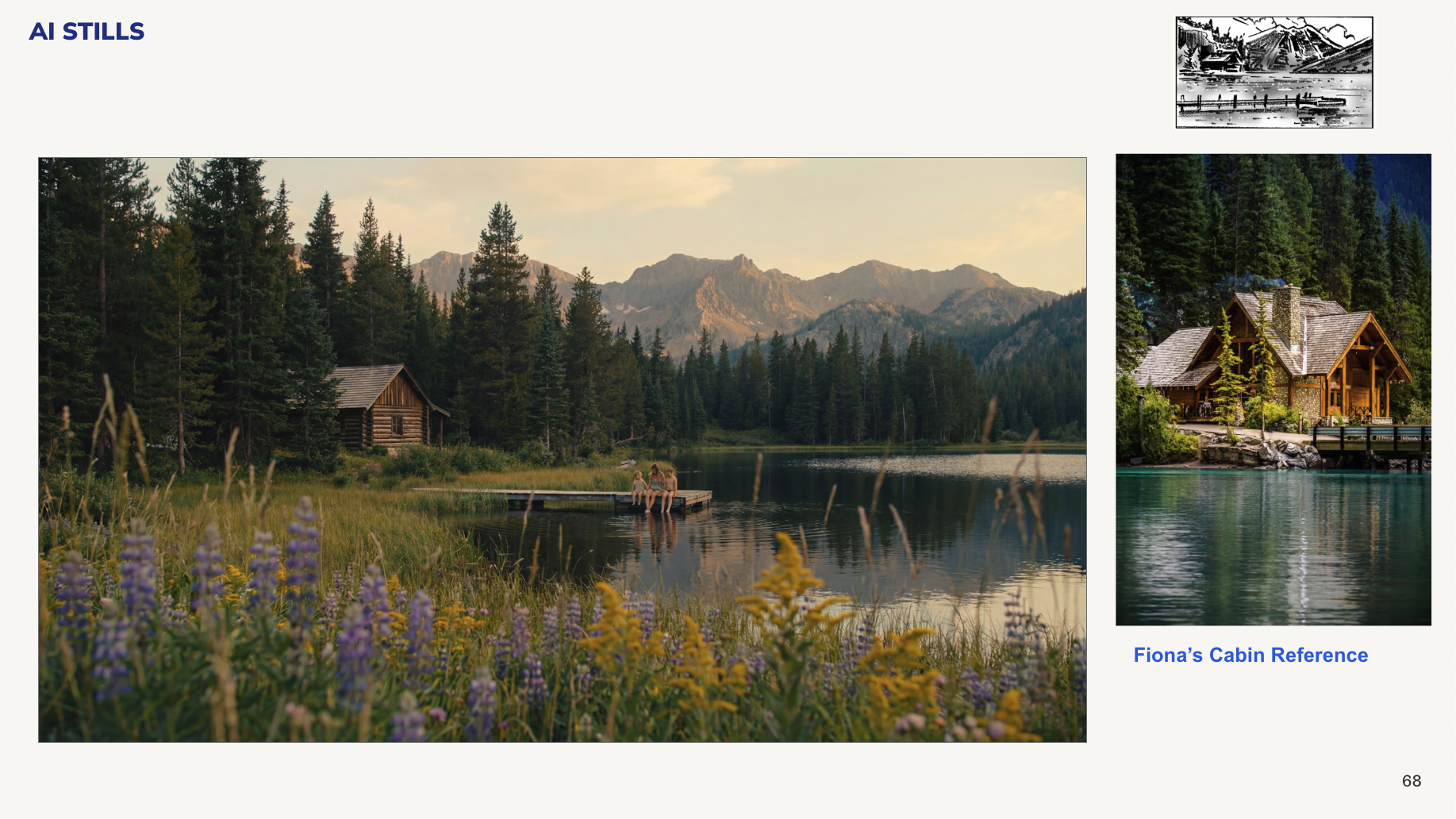
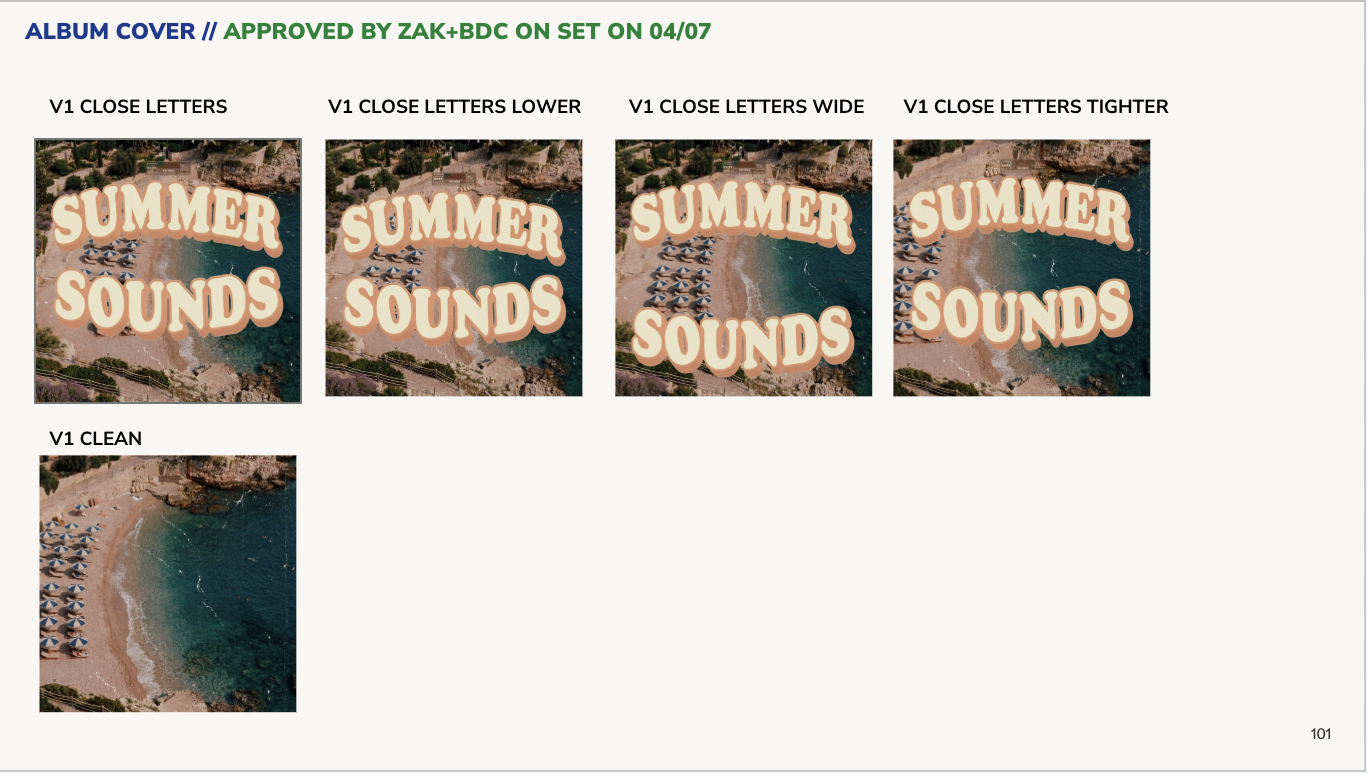
Behind the scenes.
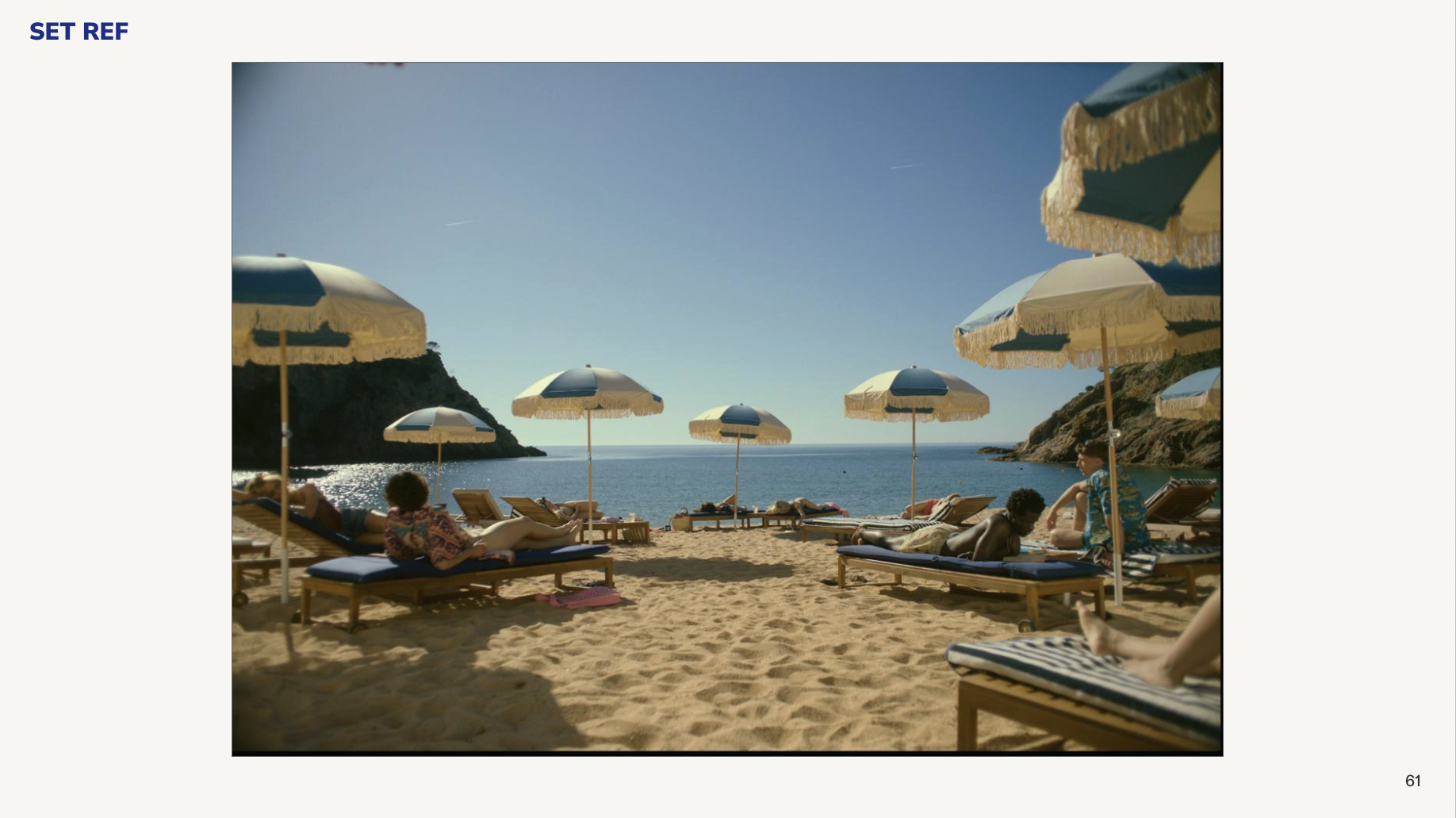
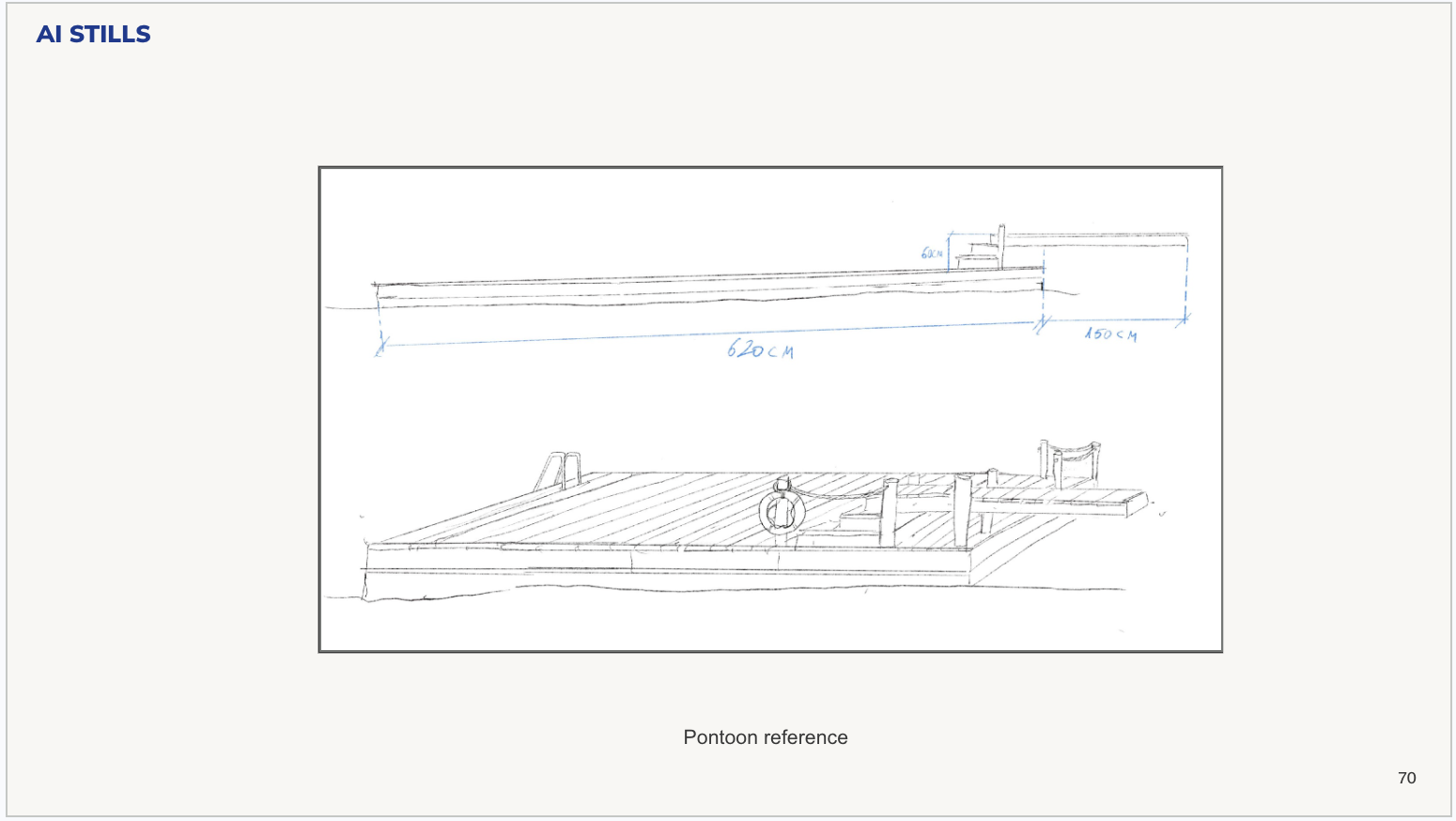
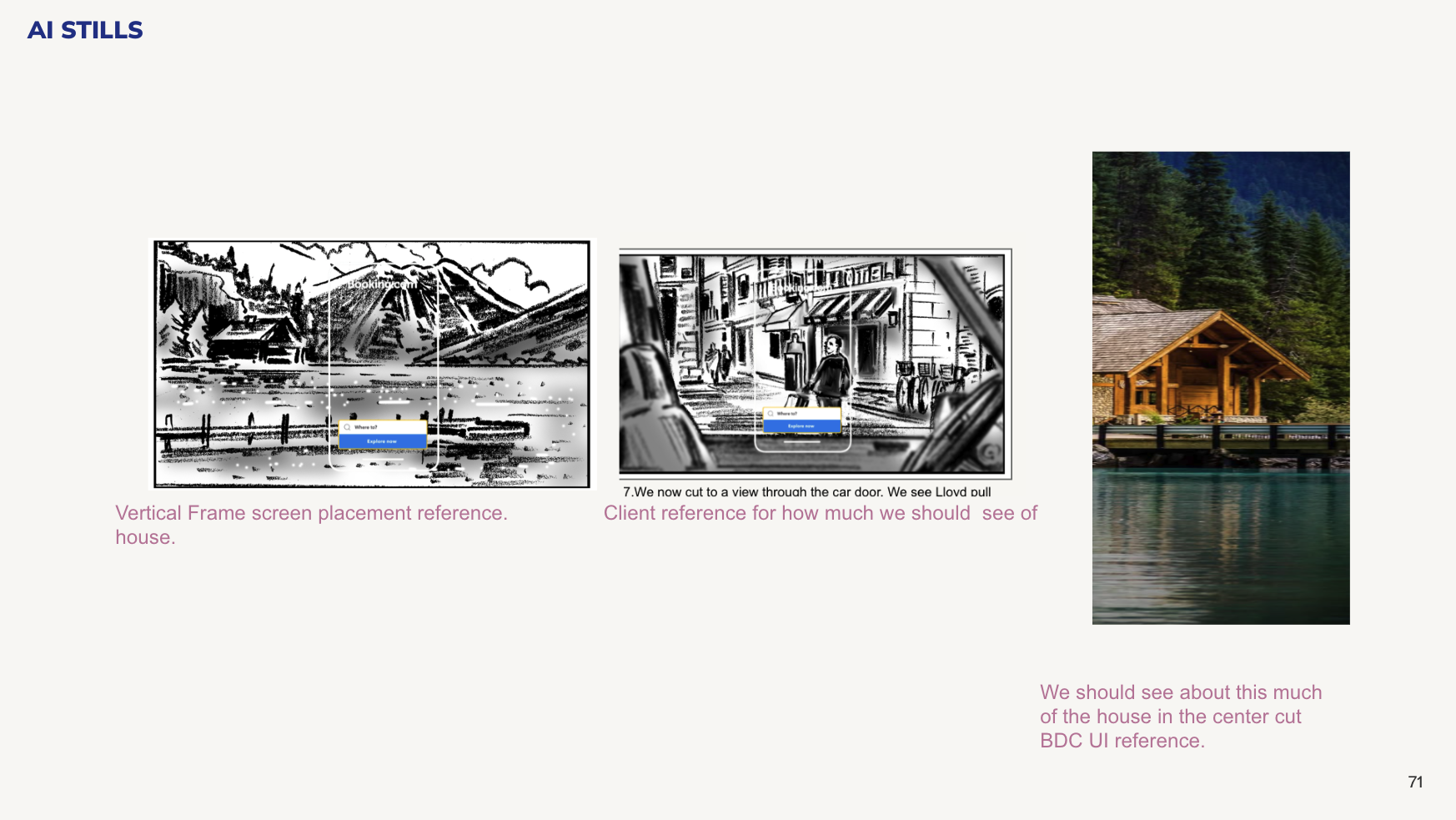
We functioned as another production department and integrated early with the live-action team to make sure the AI work was planned from the ground up. On set, we captured the visual references from umbrellas, water colour, and sand texture to lighting, scale, movement, and camera language. These details became the foundation for the AI process, allowing the generated locations to match the physical shoot and blend seamlessly into the same world.
World events,
reimagined as cinema.
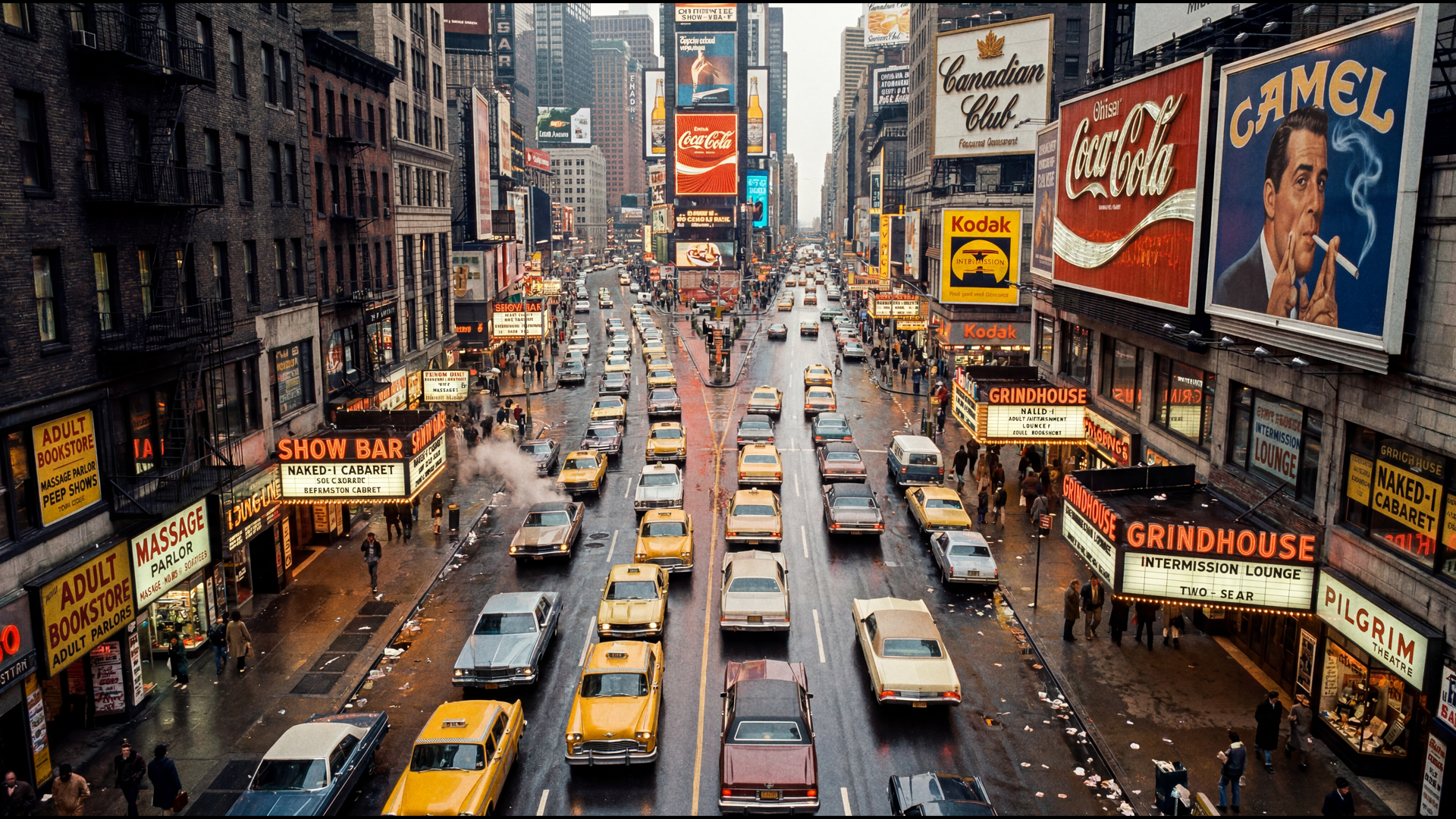
Cinema has always interpreted the real world – shaping how audiences emotionally understand history.
In a global first for premium storytelling, this series collapses the distance between event and interpretation — immersing audiences in pivotal real-world moments as they unfold.
The Decisive Moment is a director-led anthology of cinematic short films. Each episode transforms a global event into a human-scale story – crafted through authored vision and emotional intensity.
These are not journalistic reconstructions, but cinematic interpretations — placing audiences inside tension, ambiguity and consequence as history takes shape.
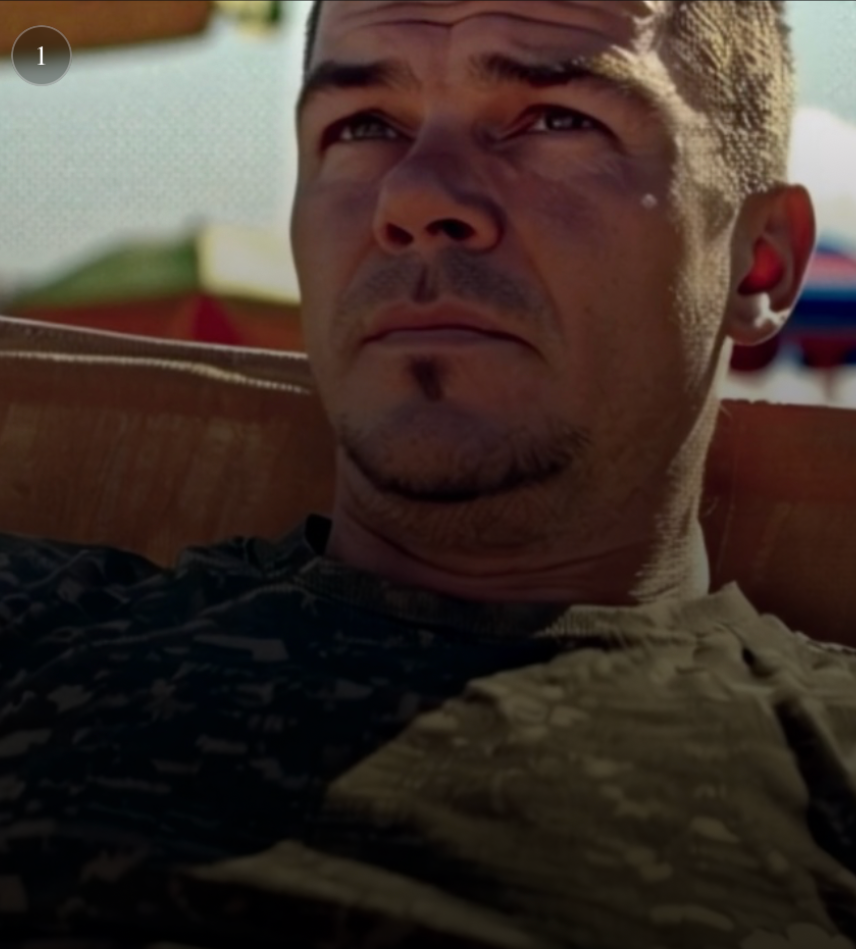
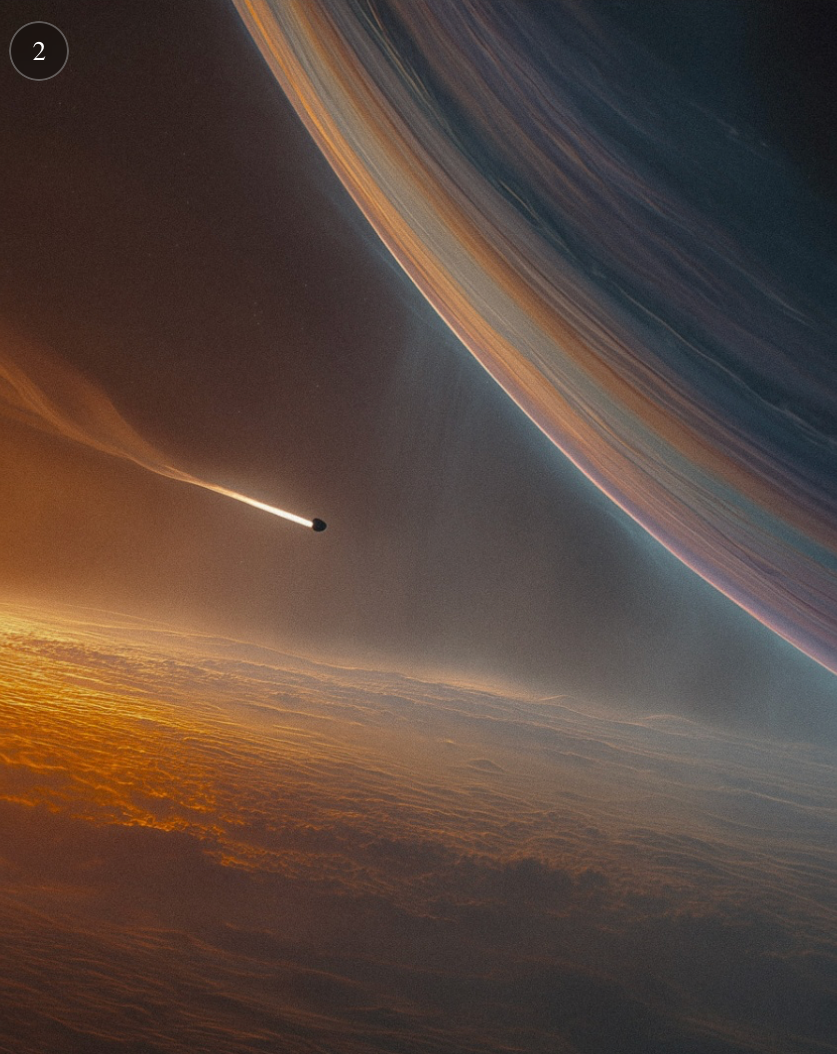
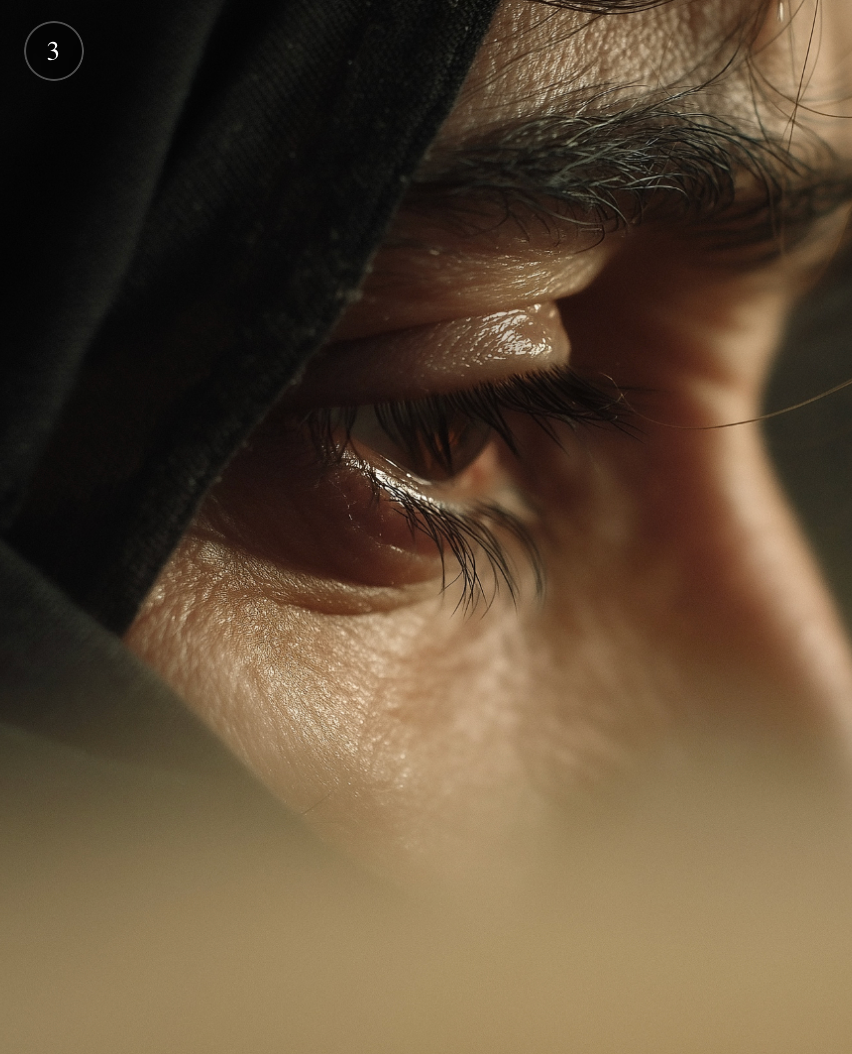
Real events. Cinematic telling.
Both. The events are real and carefully researched. What we add is craft and cinema. It isn't a news bulletin; it's a dramatization, the emotional depth of a feature film brought to a story that actually happened, while it's still current.
A documentary reports.
This dramatizes.
It carries the immediacy of breaking news with the craft, pace and emotion of a feature film. It's a format that simply couldn't exist before AI-native production.
A repeatable format.
Any real-world moment with a strong narrative can become a cinematic short: current affairs, sport, history, a brand's own milestones, all on a timeline traditional production could never match.
Impossible. Made anyway.
Was any of this live action?
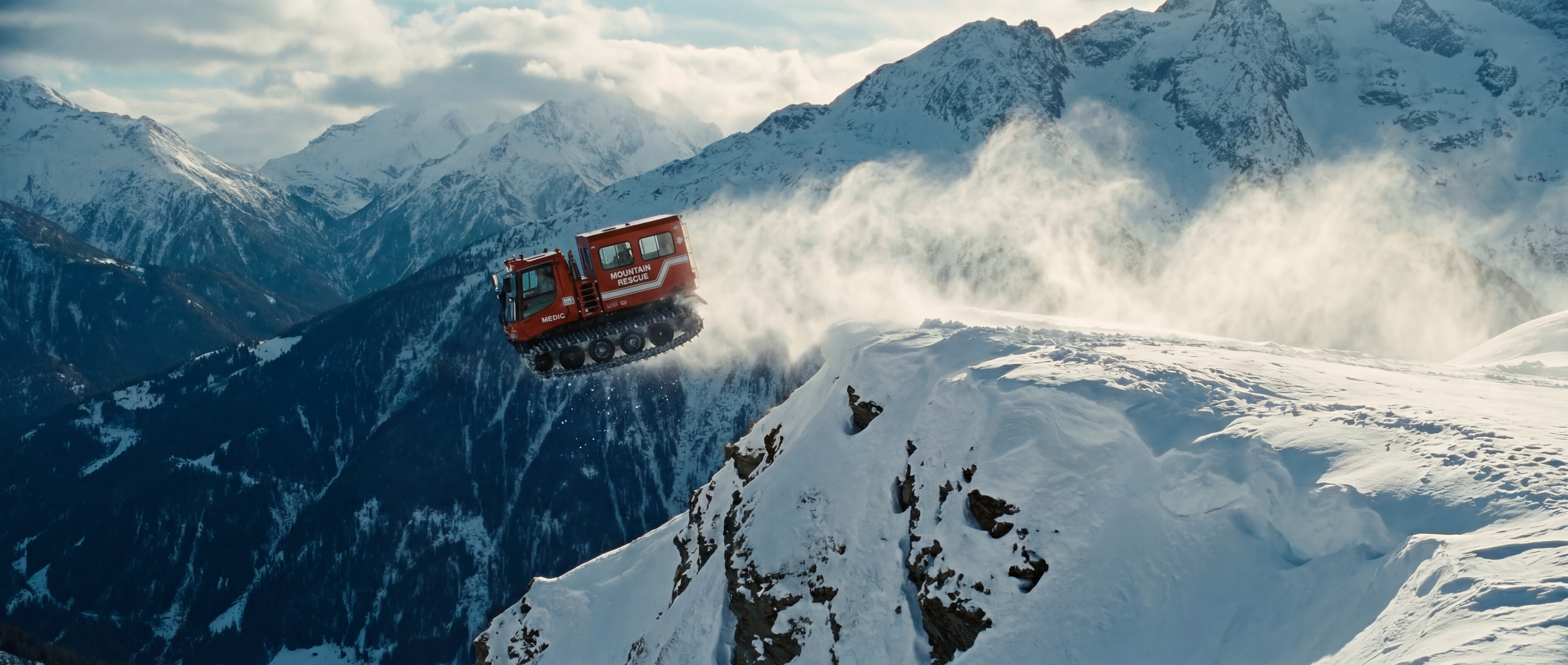
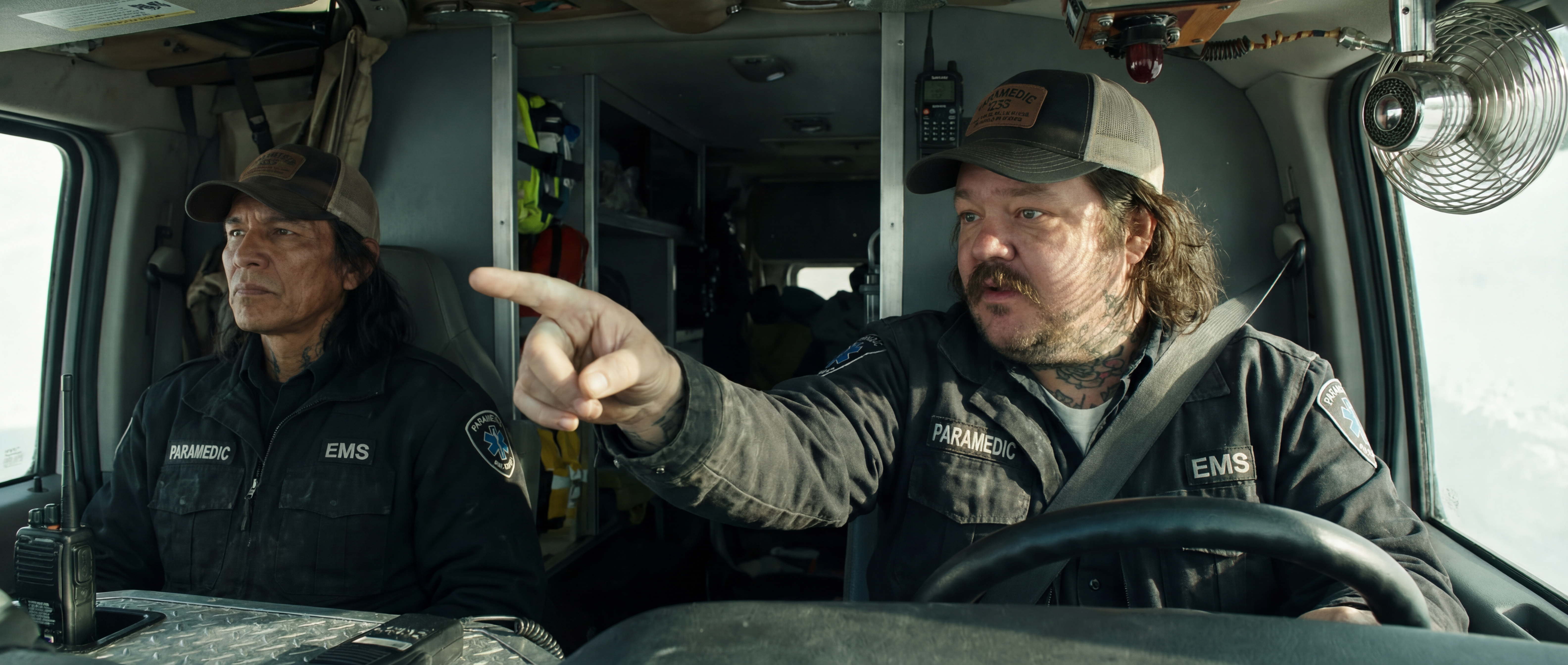
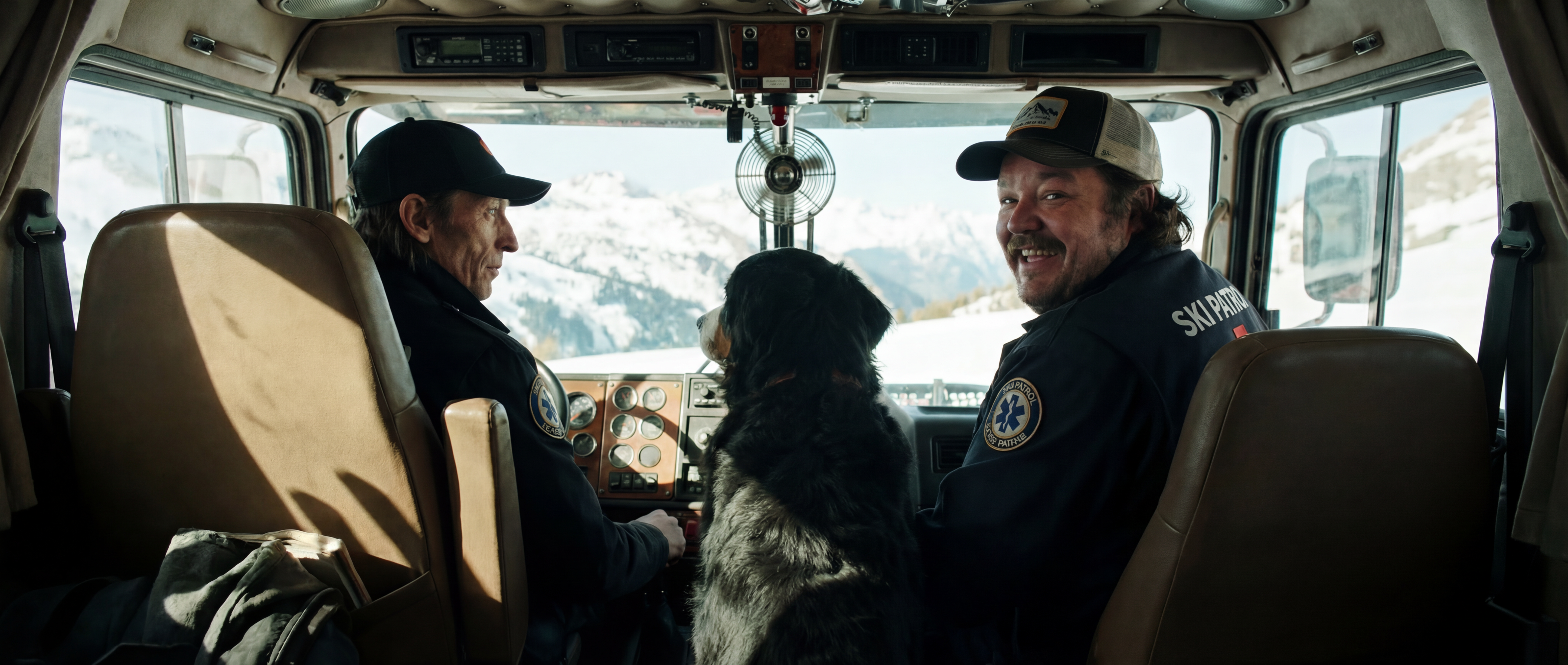
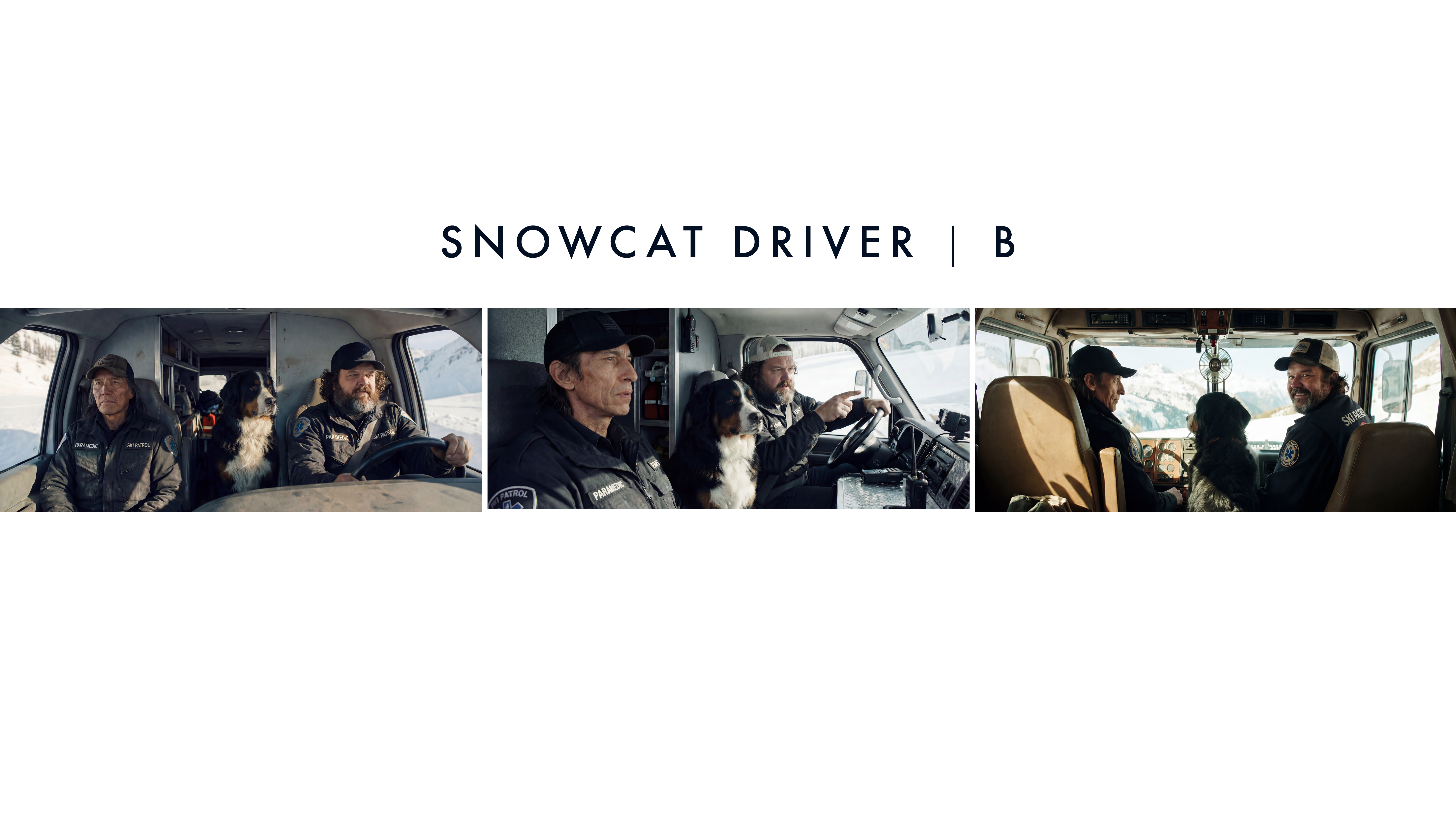
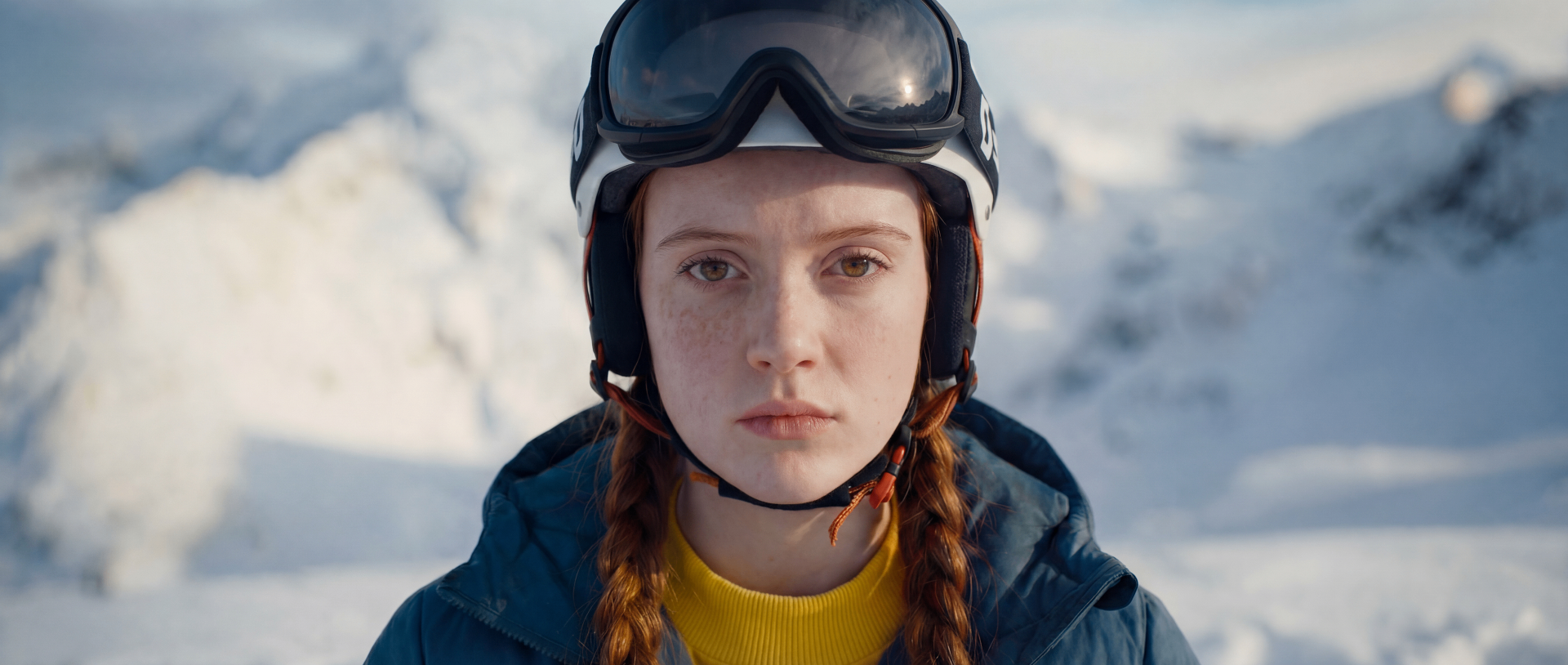
No, none of it. There was no shoot, no camera, no location, no snow. Every shot in the film, from the snowcat jumps to the crashes, was created through an AI-native workflow. The idea was too ambitious to produce traditionally, so we generated it instead.
Did you work with real actors?
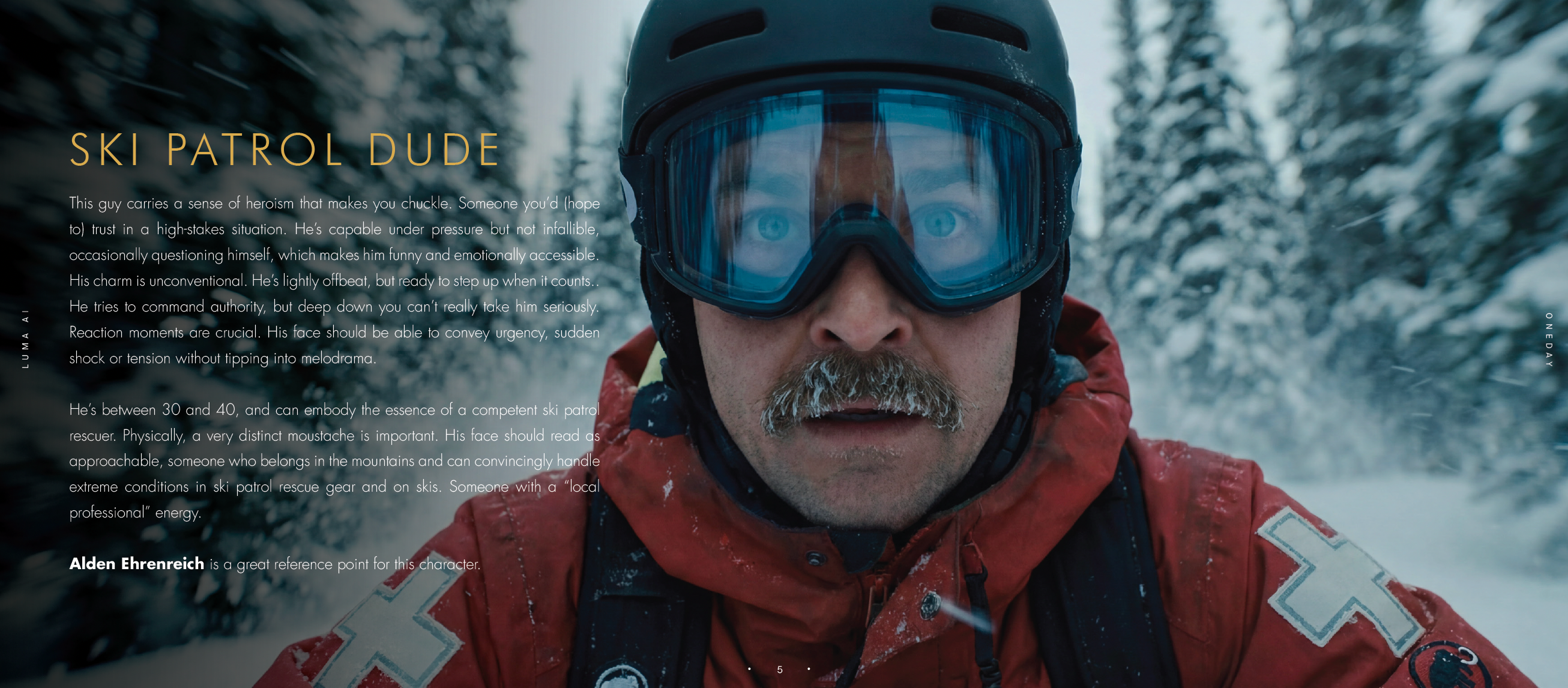
Yes and no. The cast is a mix of real actors and synthetic characters designed from an agreed casting board. The real performers were captured once, in a single session, so their likeness and performance could be carried into every shot. We were then able to create a full spectrum of actions, reactions falls and near-death experiences from that single session.
How long did this take?
From the first creative call with Hal to the graded, delivered commercial. A production of this ambition would have been out of reach on a traditional live-action timeline and budget.
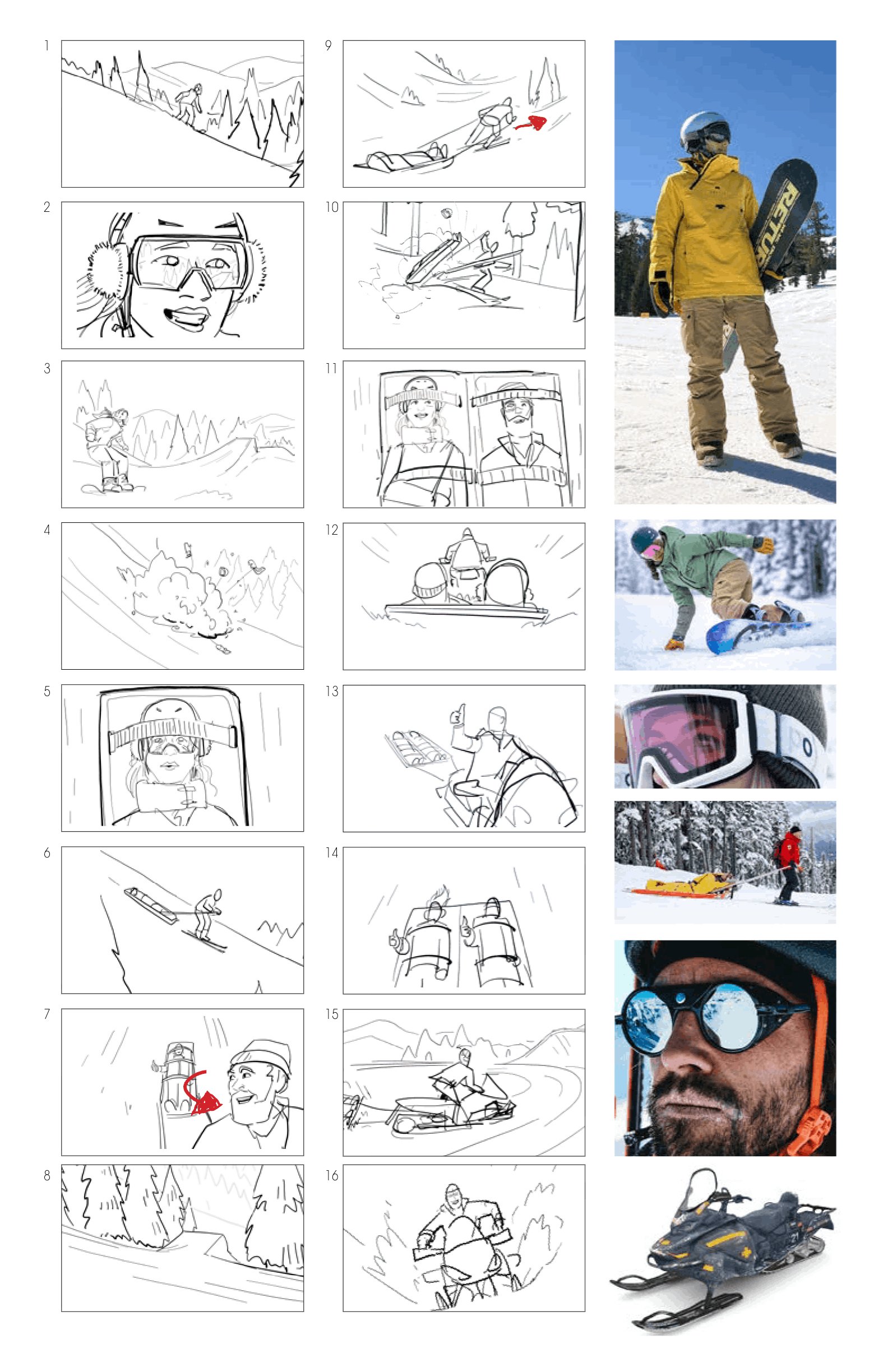
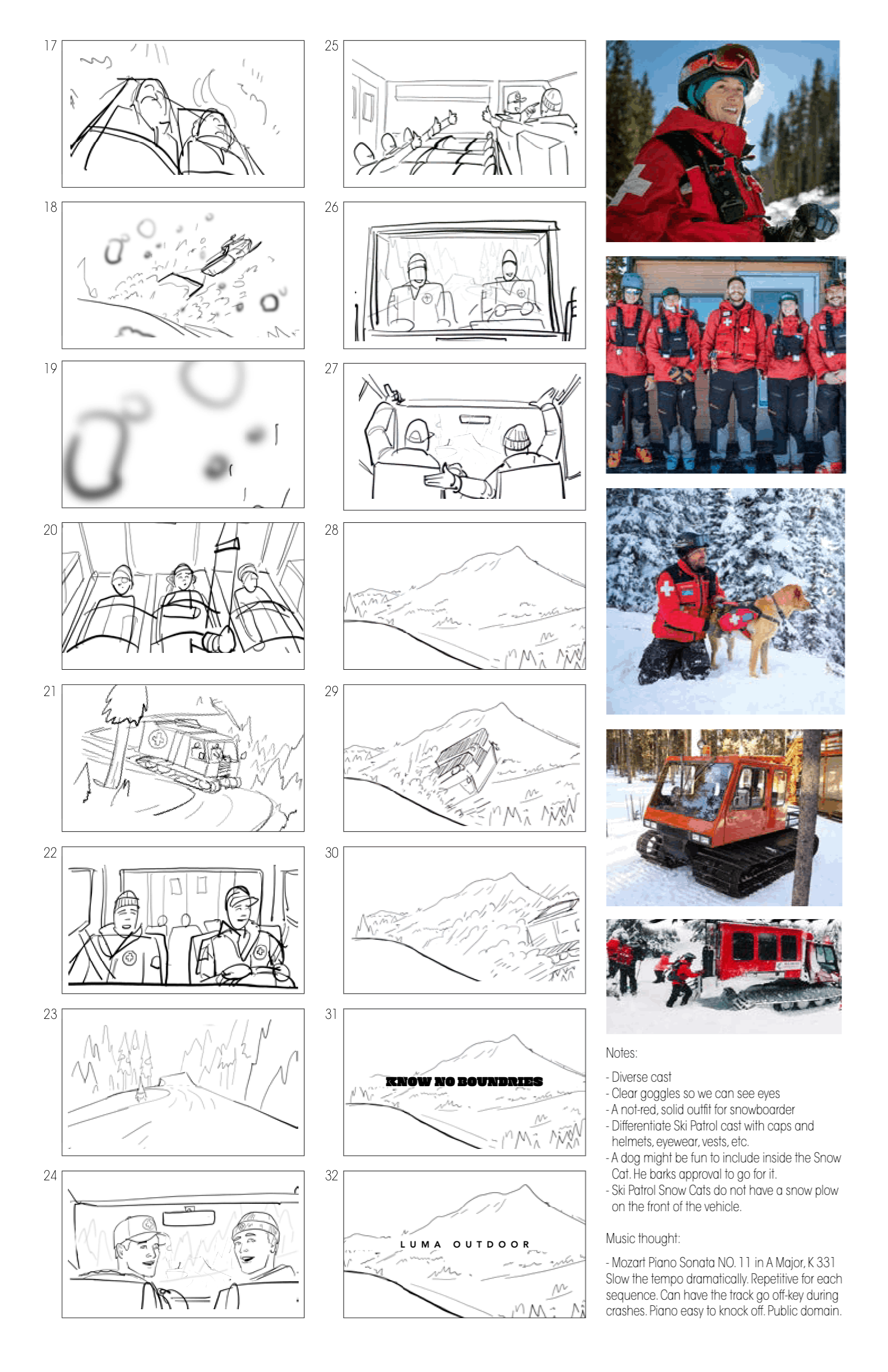
Hal's original boards.
The film started on paper: 32 hand-drawn frames, casting and wardrobe references, and notes down to the music. Every generated shot was held against these boards. Hal has been sitting on this idea for 20+ years and gave us a very clear vision we were able to see through to the end, while adding character development, scale (and a squirrel). Final shot count: 75.
Idea to film, step by step.
Script & first call
The process began with the script and a first creative call with Hal. This gave us the opportunity to understand the tone, rhythm, references, and intent behind the original idea.
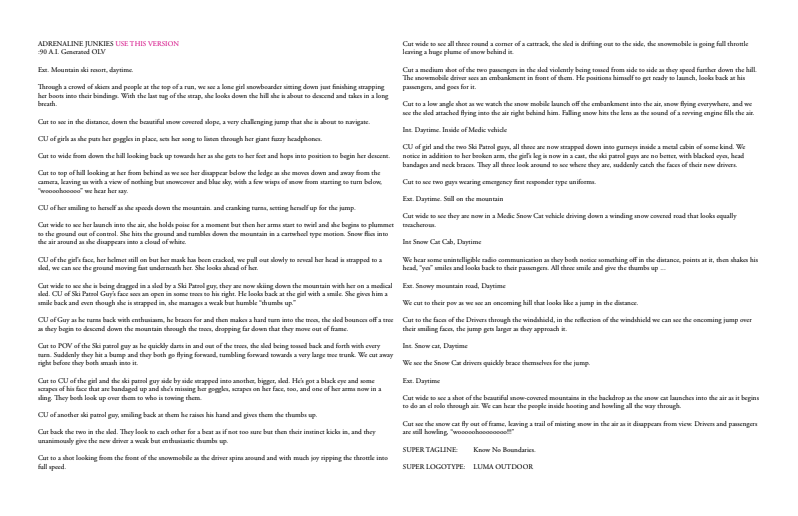
The take
From there, we developed an initial creative take: a visual direction built around references that matched the world Hal had in mind. This step helped translate the idea from script into atmosphere, tone, and cinematic language.
Two boards
Two visual systems were developed in parallel. Hal created his storyboard, mapping the action and comedy beat by beat. OneDay built a world and casting board, defining the characters, environments, styling, and visual rules of the film.
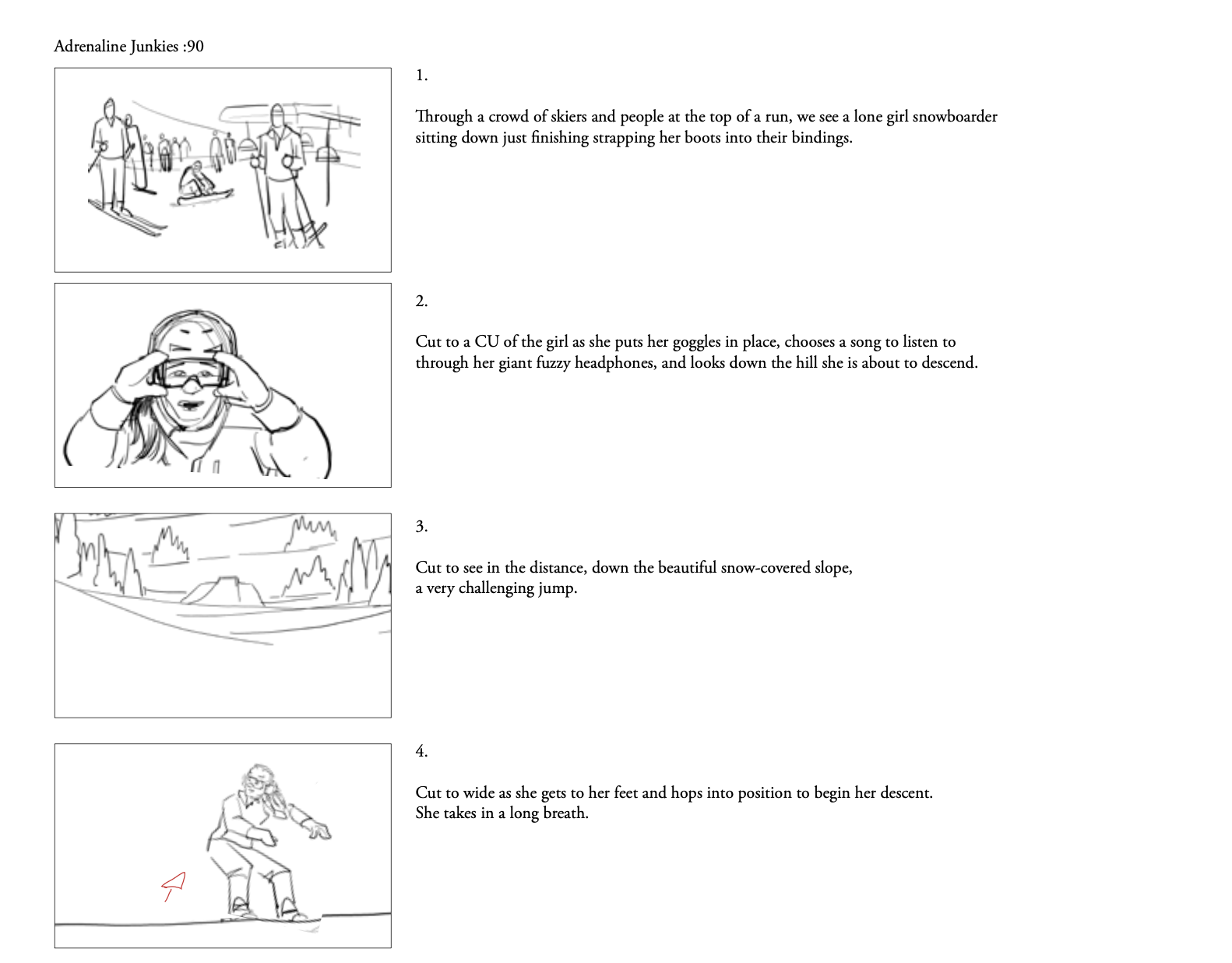
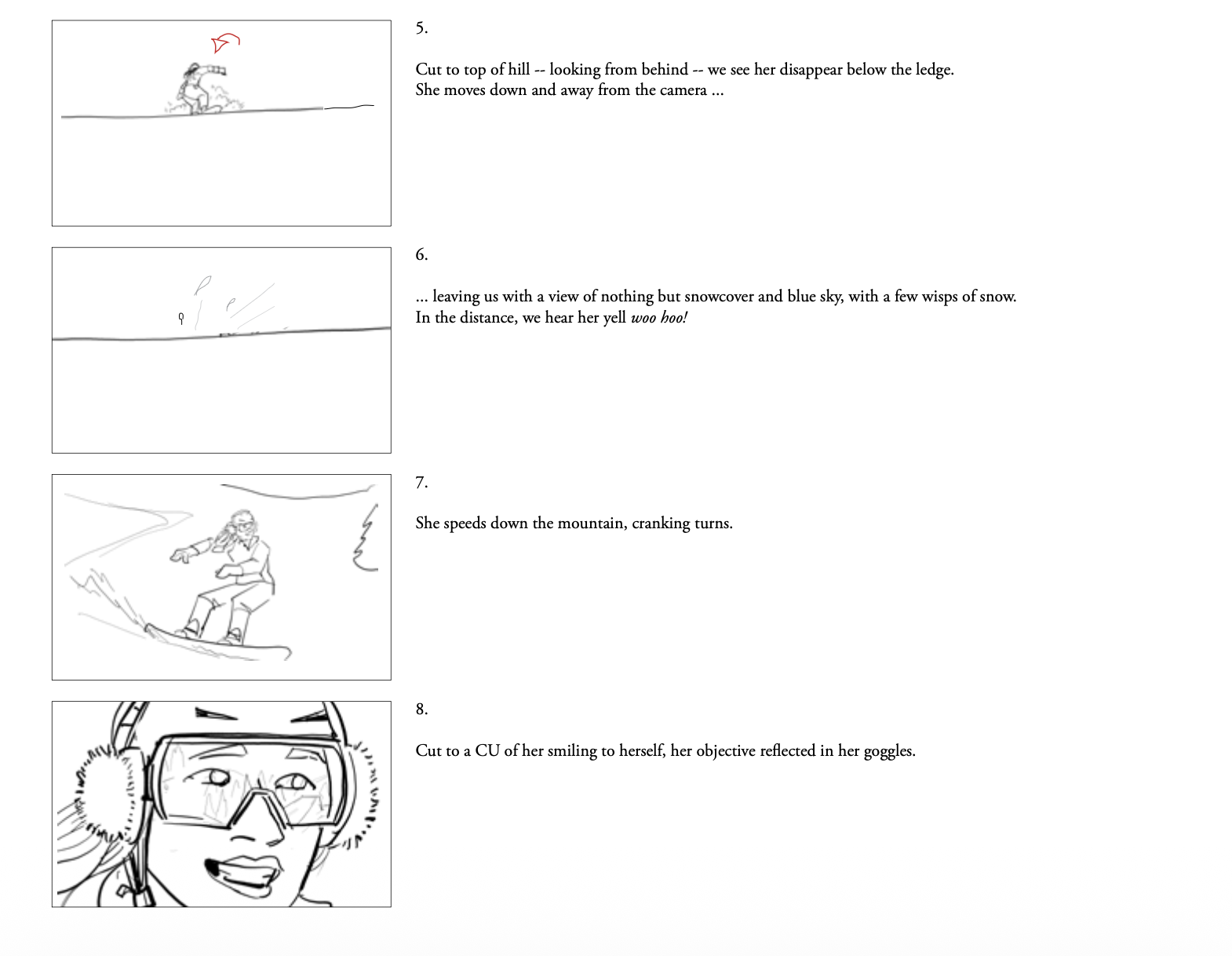
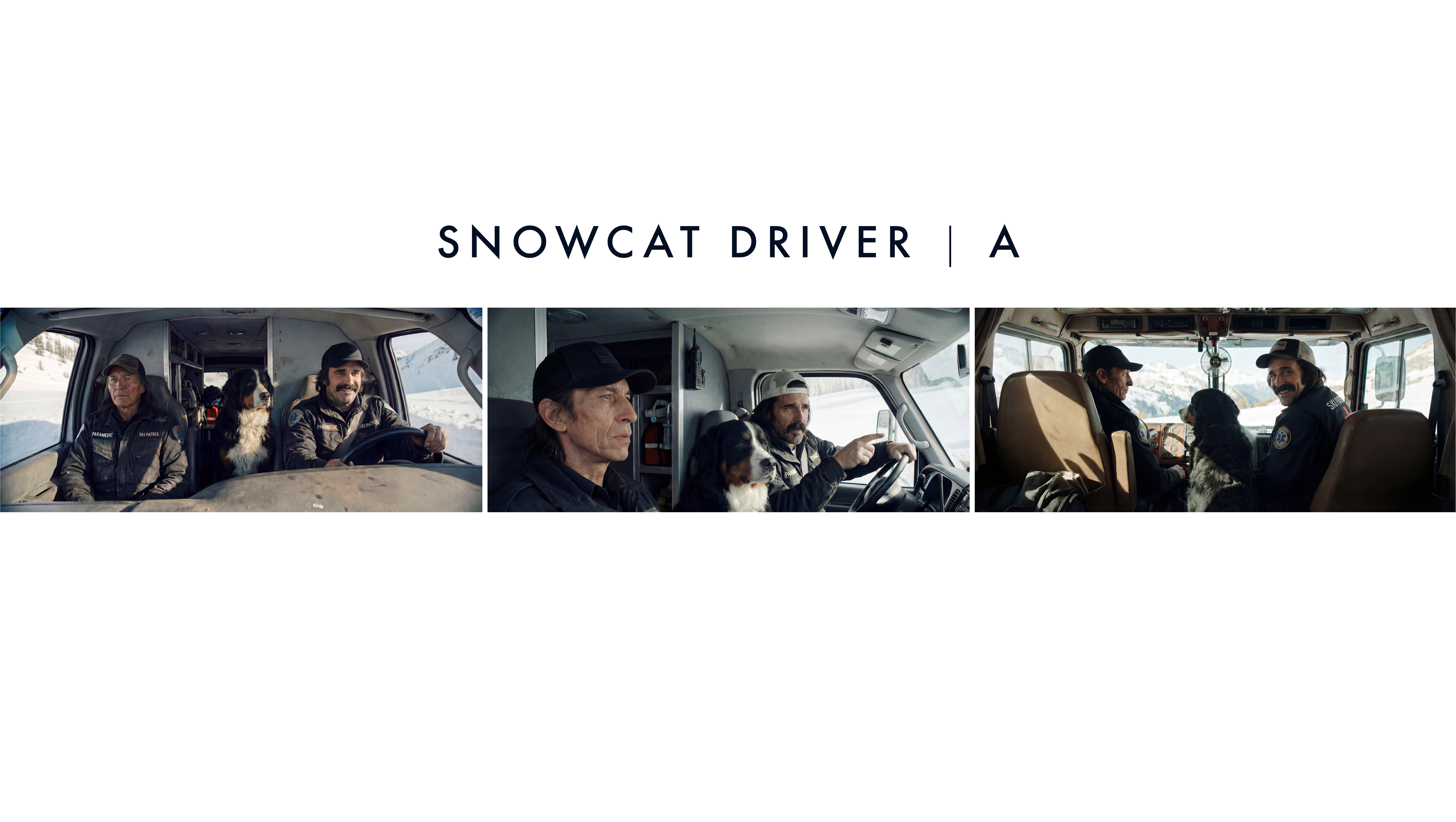
The Bible
The strongest ideas were then gathered, refined, and locked into a single creative bible. This became the shared reference point for the team, aligning everyone on what worked, what didn't, and what the final world needed to feel like.
Browse the full Bible (PDF) →First edit
Before generation began, Hal's boards were cut together with the music he had in mind. This early boardomatic helped test the rhythm of the idea, explore music direction, and start feeling the film as a timed piece rather than a sequence of isolated shots.
AI stills generation
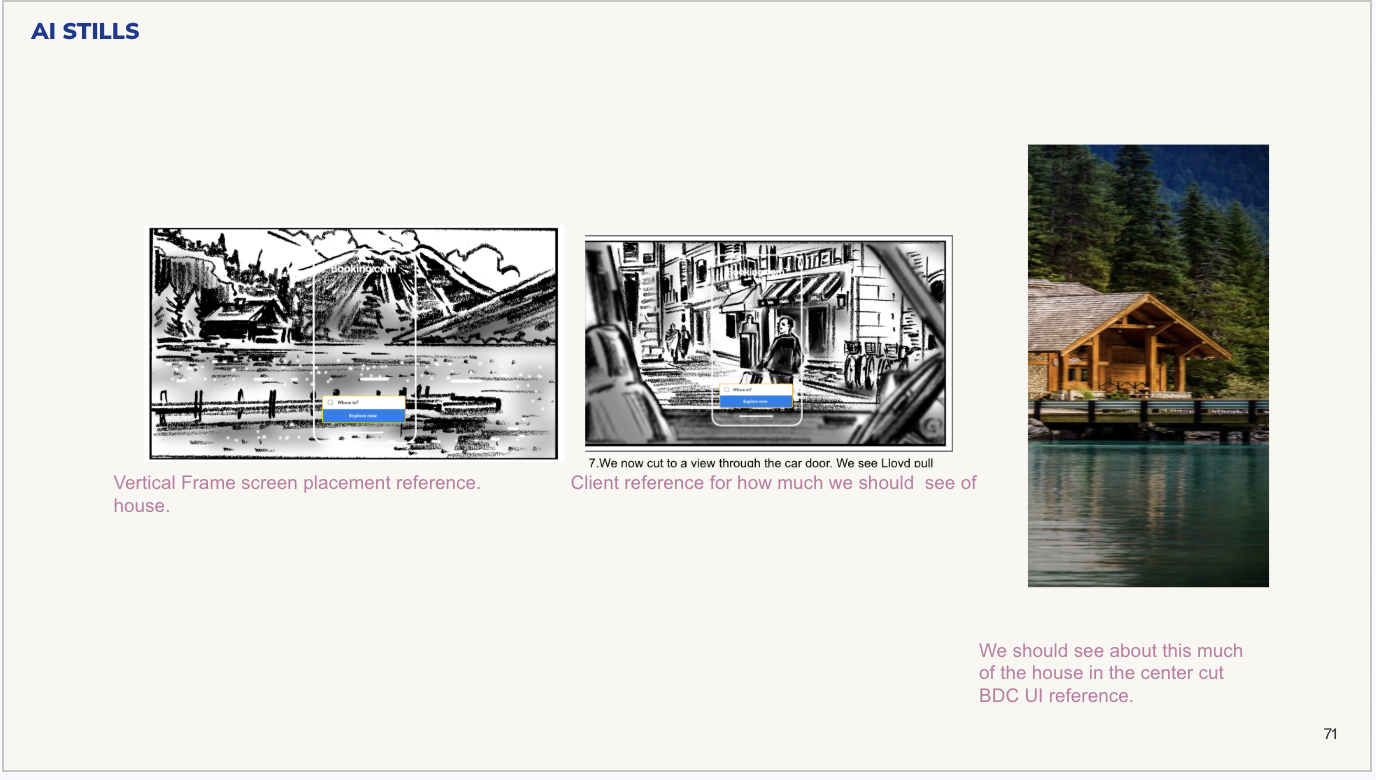
With the direction locked, we began generating stills from an agreed shortlist of shots. This included storyboard frames as well as new ideas that emerged during the process, from additional cab drivers to the dog. The stills stage allowed the team to test, compare, and expand the world before moving into motion.
The AI-matic
The selected stills were assembled into a timed cut with sound. This AI-matic allowed the team to scrutinise the film as a whole, identify gaps, test pacing, and generate new ideas before locking the structure.
Video generation
Once the stills base was locked, we moved into motion generation. Each shot was developed from the approved visual foundation, while still leaving room for new ideas to emerge. Weekly reviews kept the process aligned across a high shot-count commercial.
First cut
The first cut came in at around two minutes, giving the team a full version of the film to work from. From there, the project moved into a more traditional edit and post process, tightening the film down to 90 seconds and making sure every beat served the idea.
Finishing
The fine cut was then finished with music, sound, colour, cleanup, and final polish. Music was developed with the music house, sound was handled in-house, and the film was taken through grade and delivery like a traditional commercial.
Done
From first script to final film, the full process took 2.5 months. The result was a fully AI-led commercial built from an idea that had once been too ambitious to produce traditionally.
How we work with you.
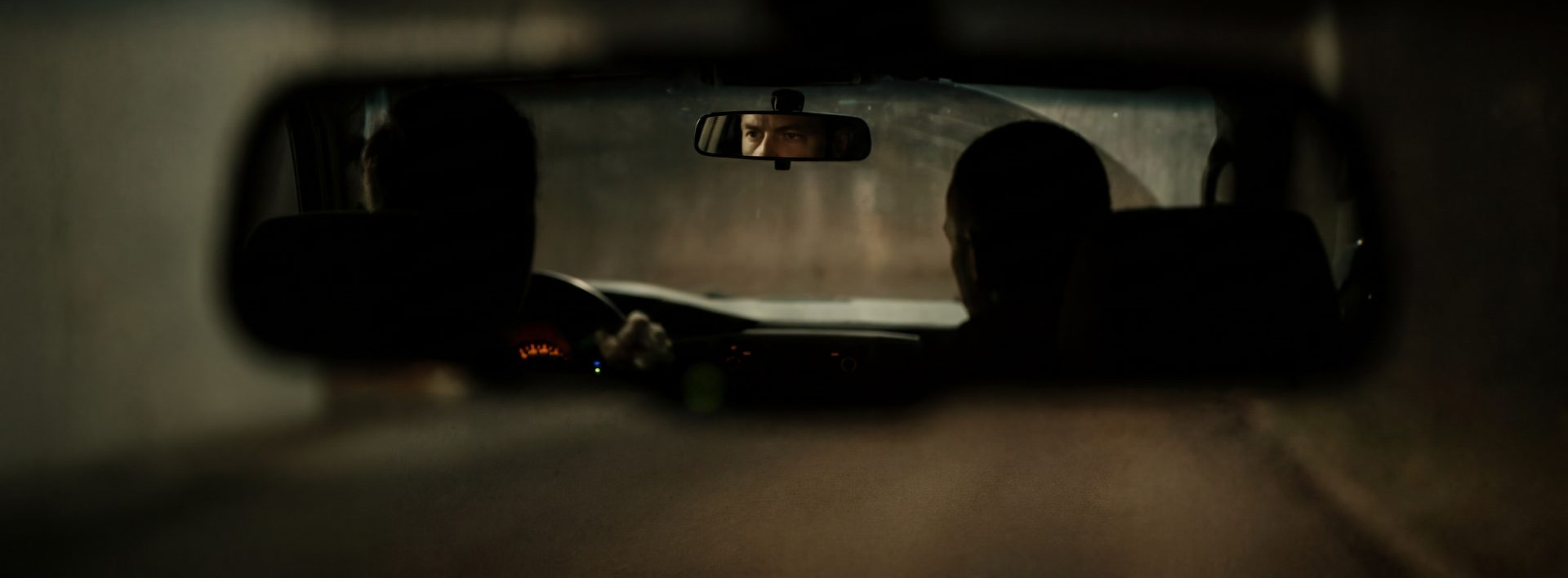
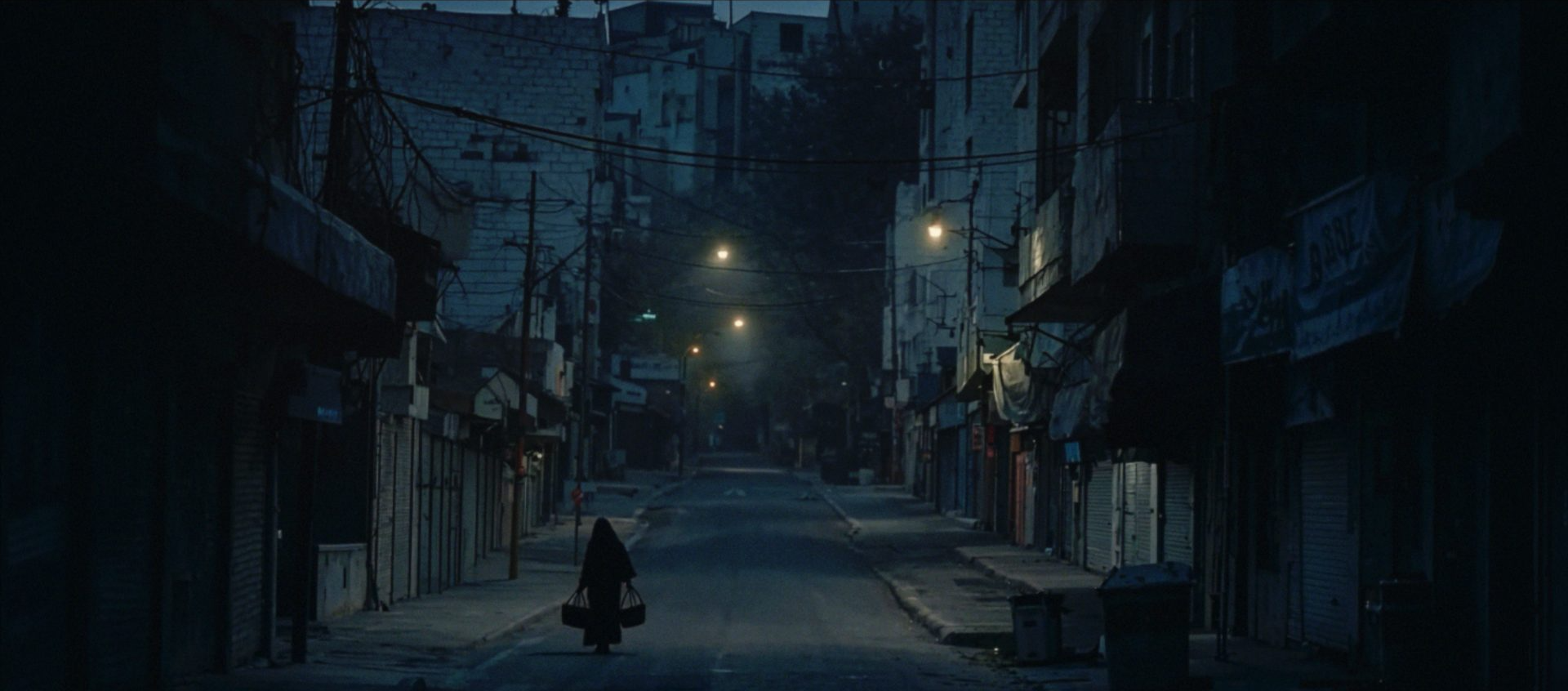
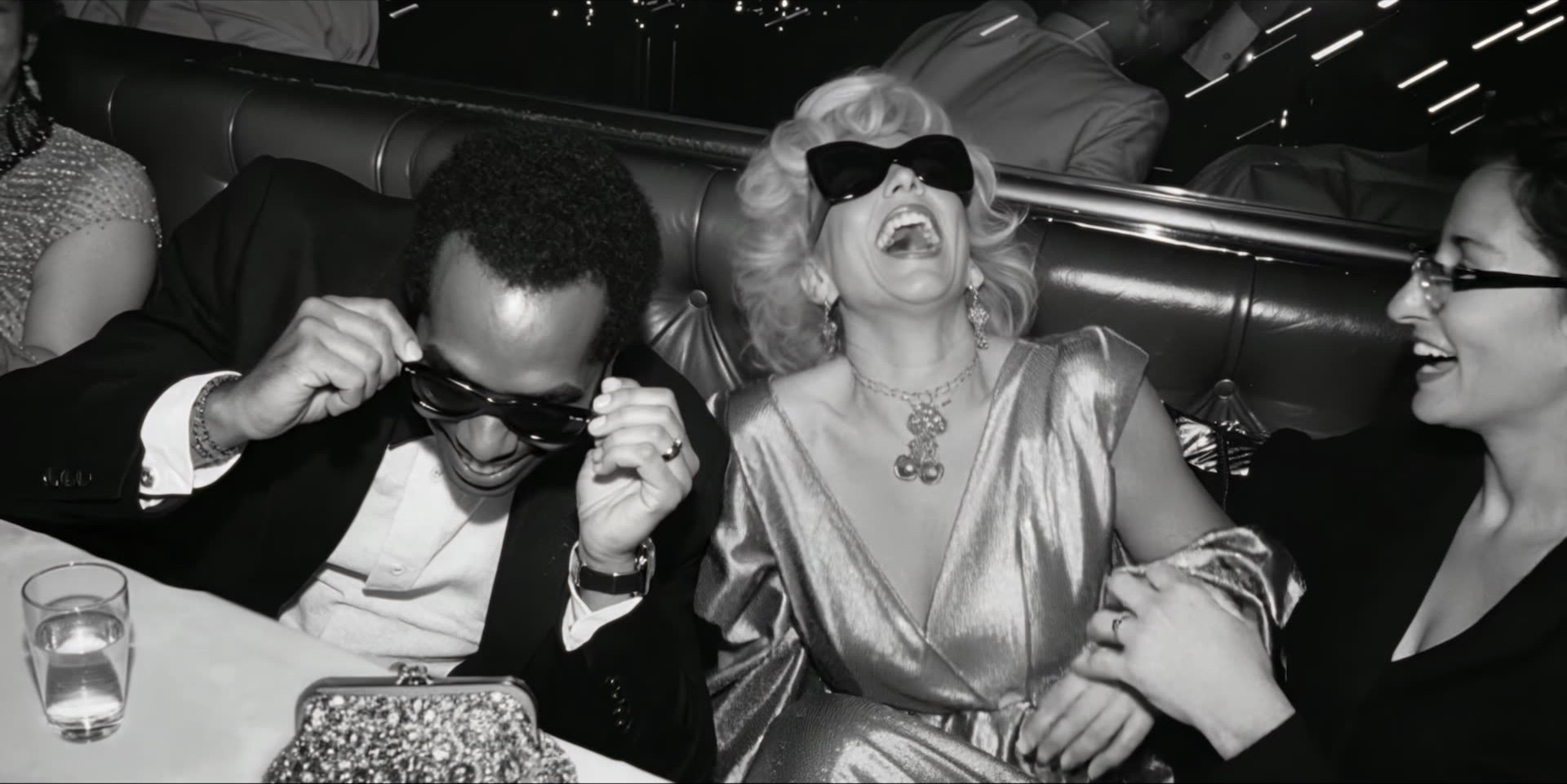
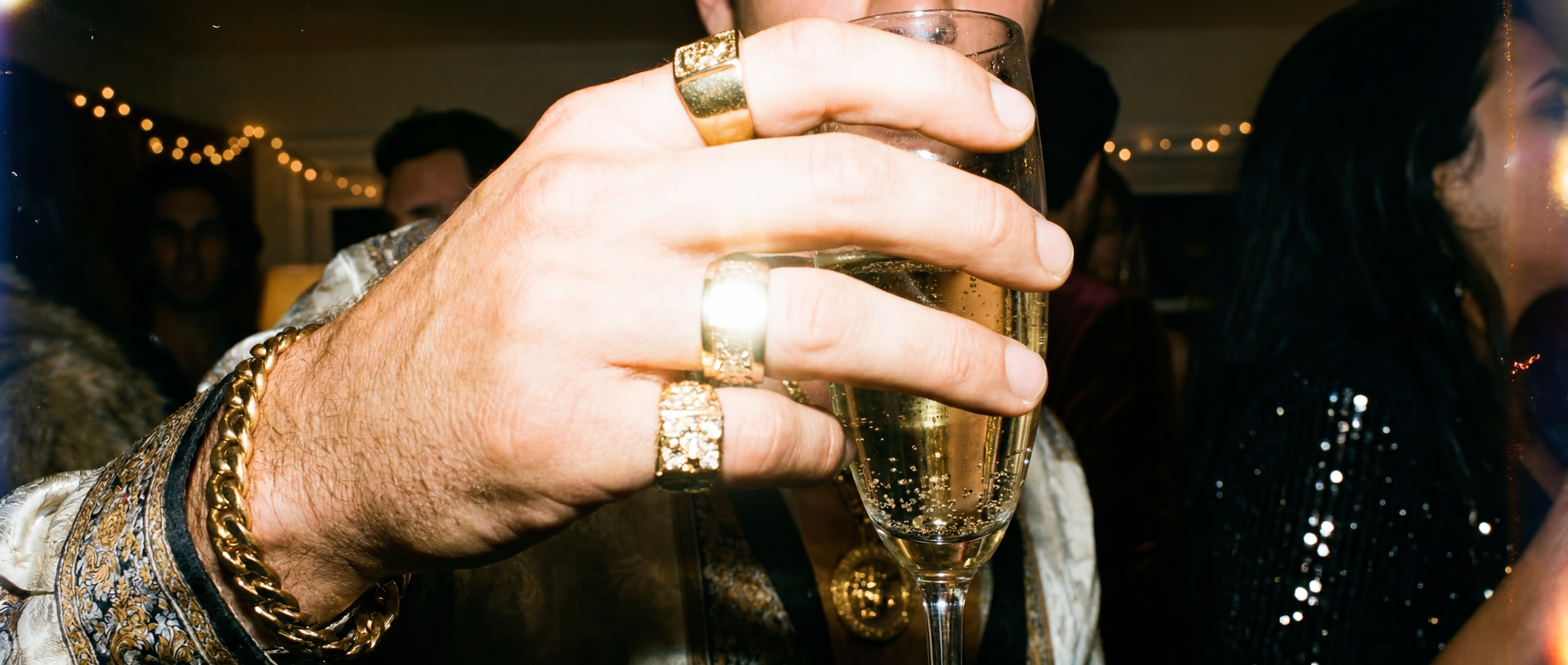
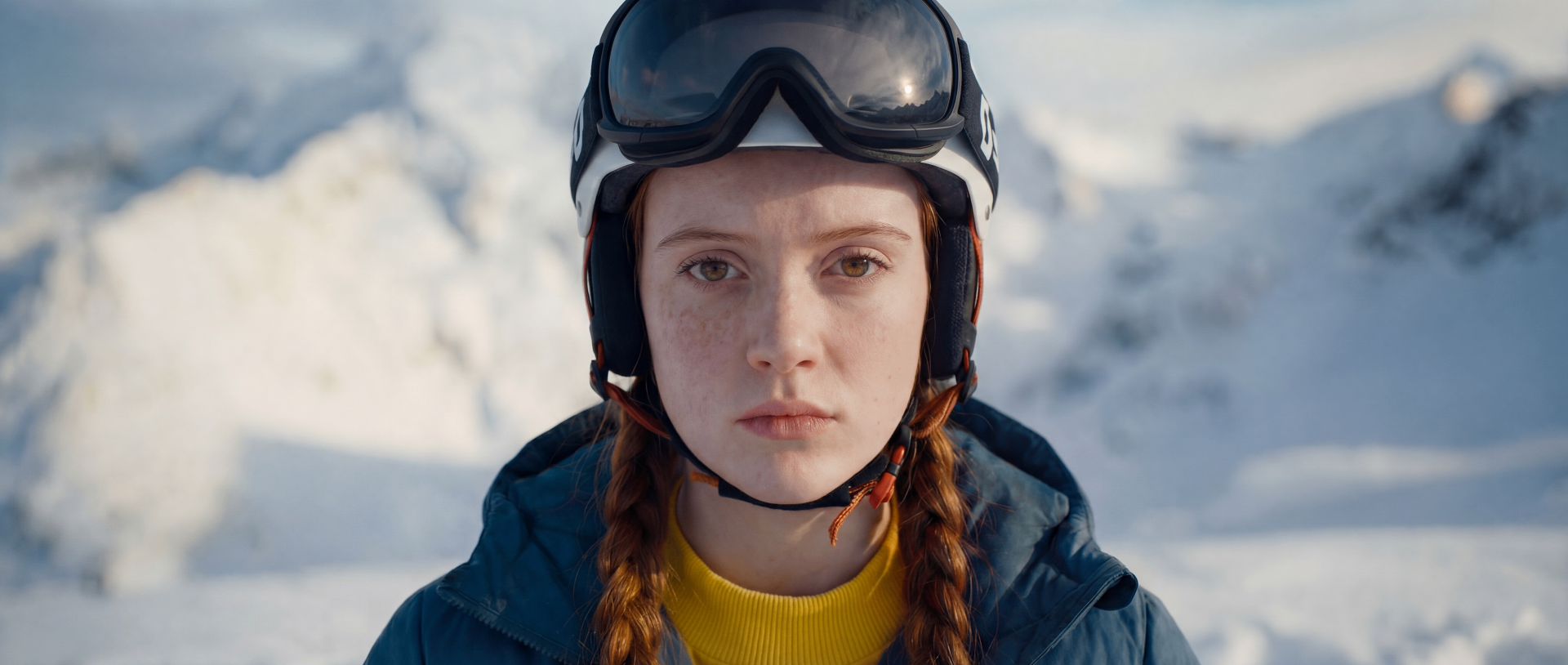
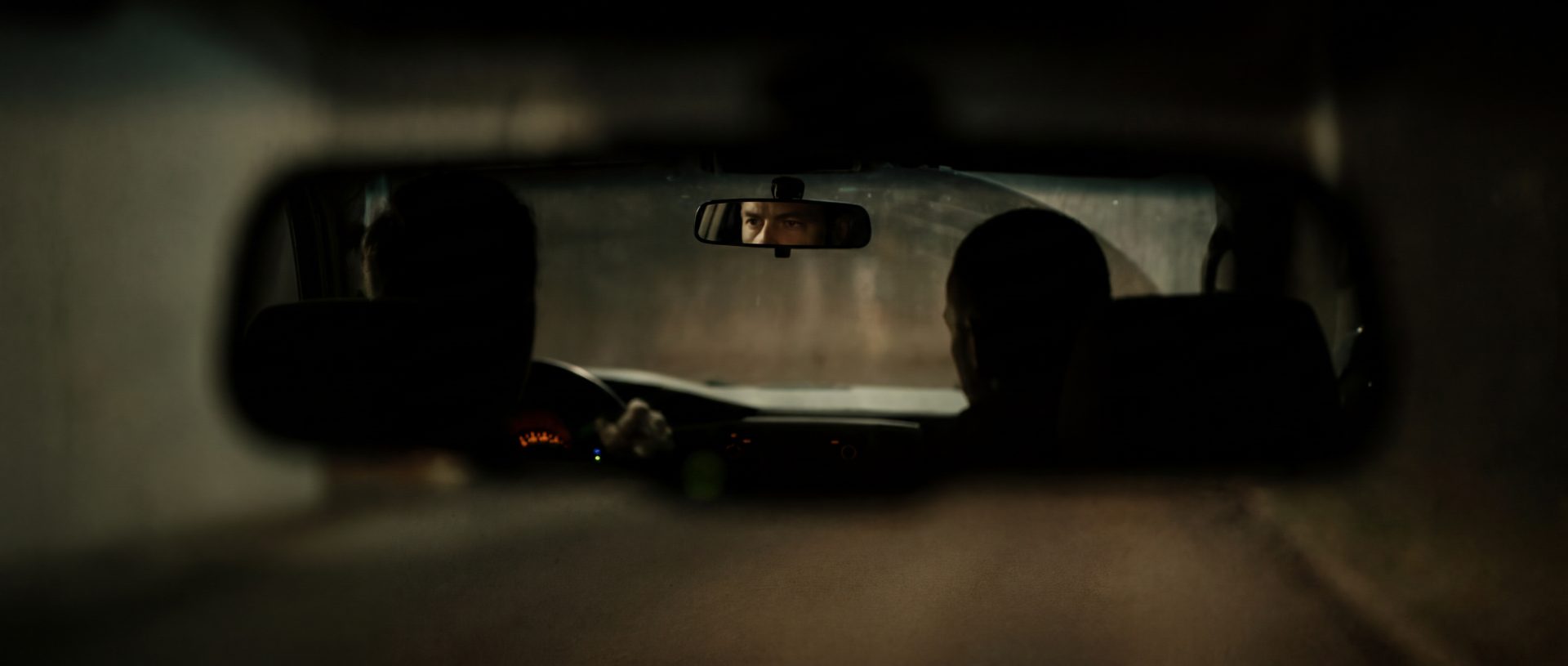
We close the gap between idea and execution.
The first thing we do is sit down, one to one, and talk through your approach, and your comfort level with AI: what you feel should be AI, and what needs to stay live-action. We've been on the other side of this ourselves, so we know every director draws that line in a different place. We start from yours.
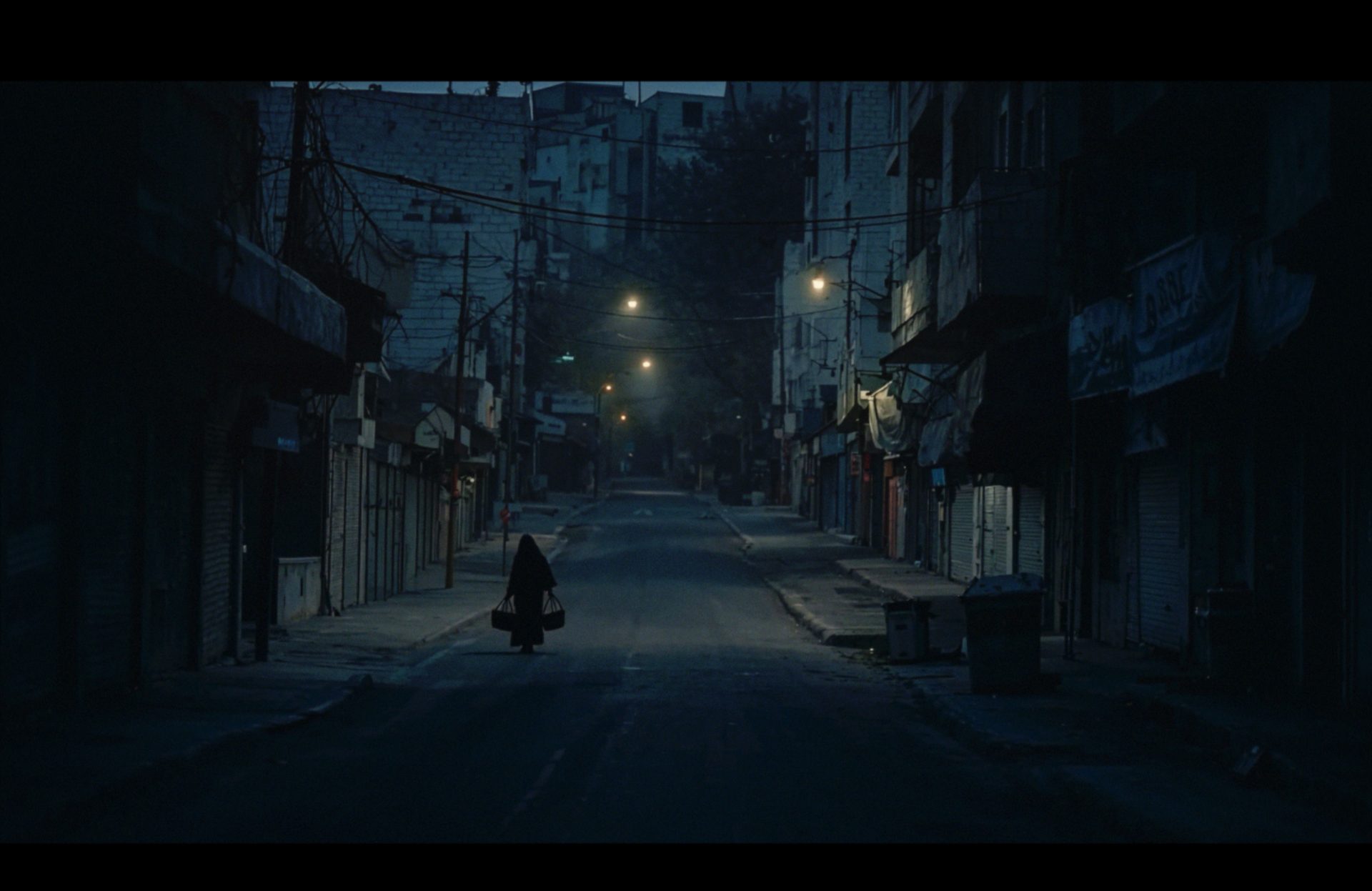
Bring us in early.
Shaping the conversation.
Expand what you already own.
Script first. AI after.
Real actors. Real performances.
Our process.
How a project moves.
Every project.
Its own process.
Our AI workflow: integrated, built for collaboration and refinement.
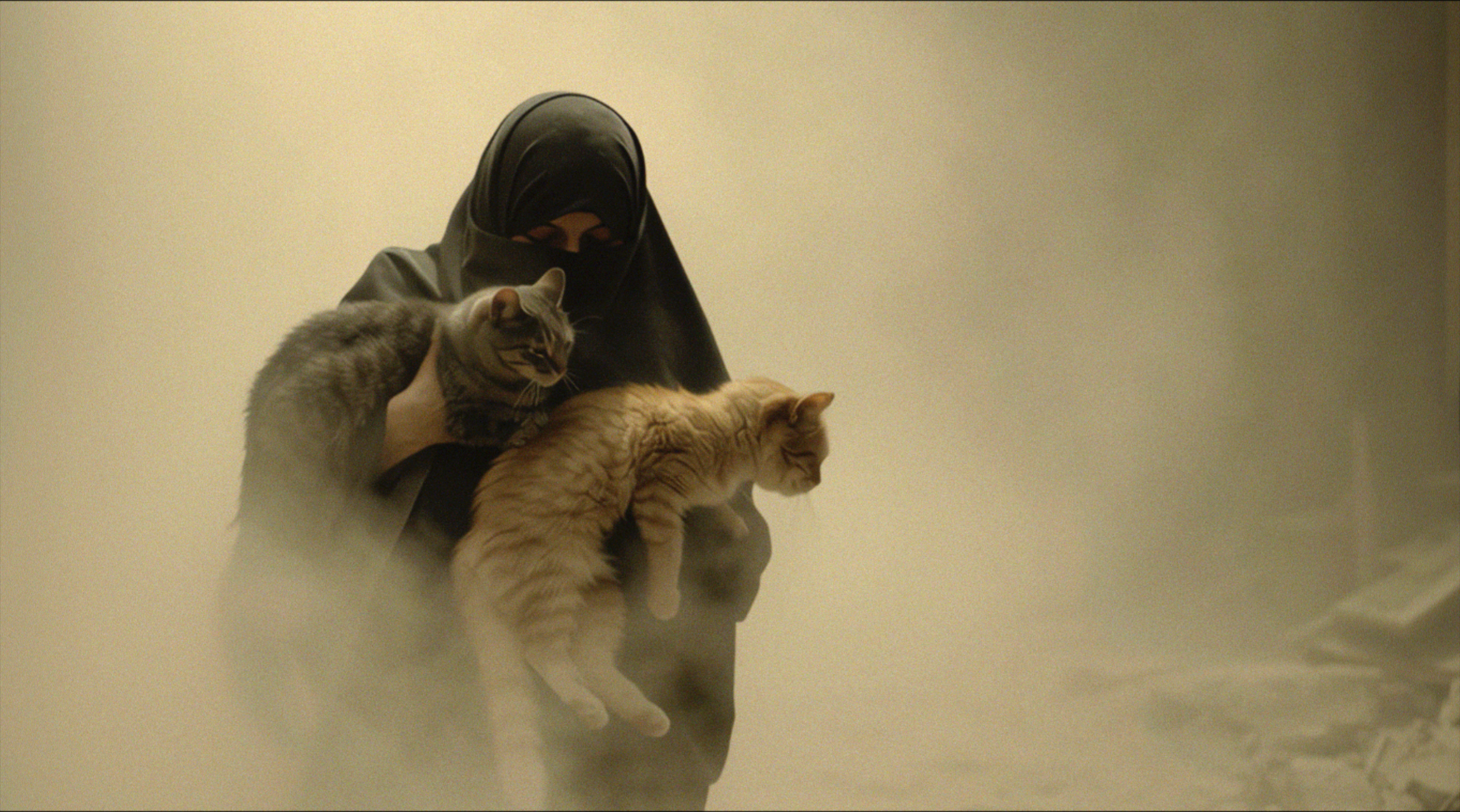
Ethical AI.
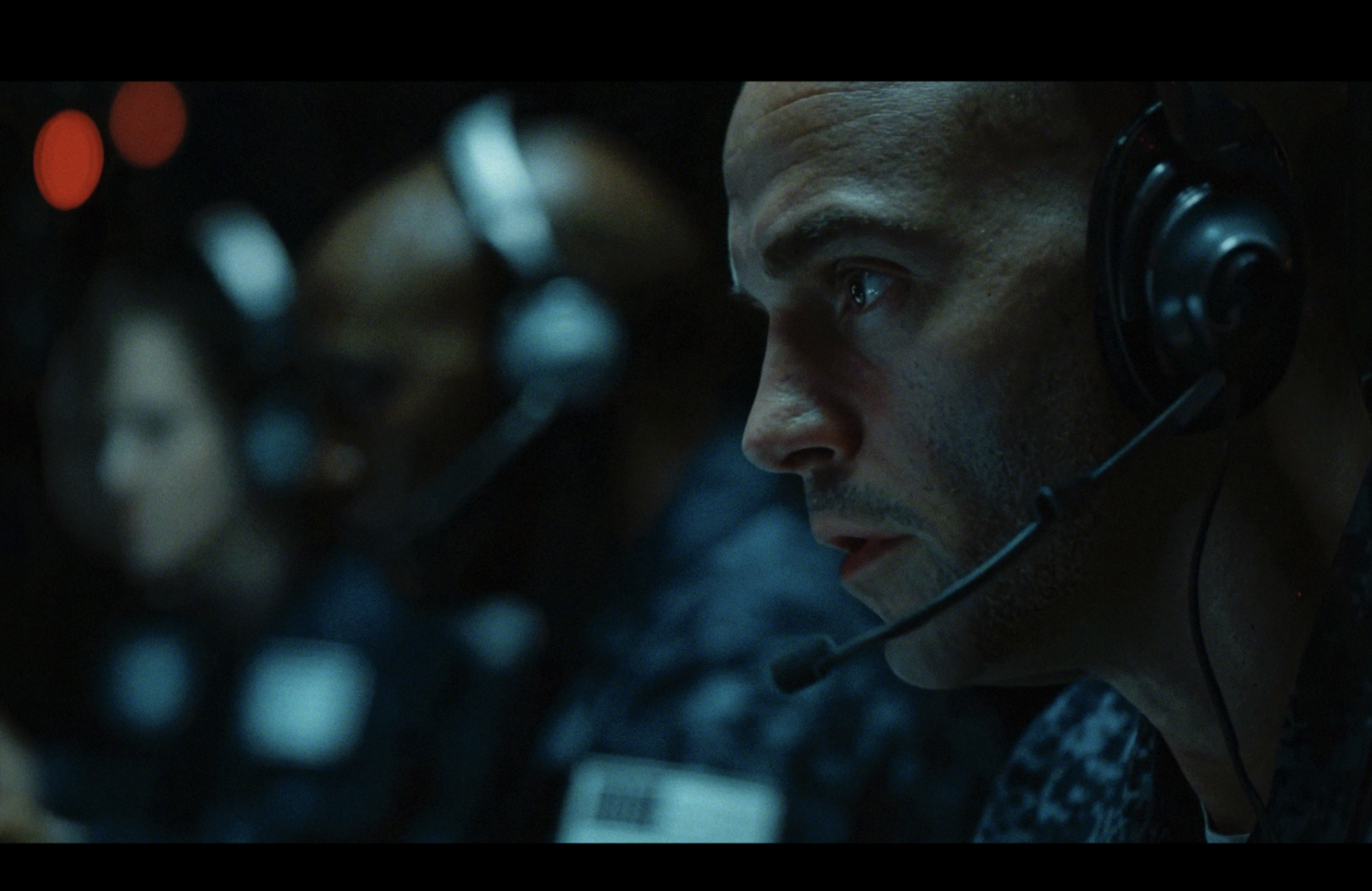
The number one tool is our creativity.
Every project this year has been different. The tools change so fast, and the ask shifts brief to brief, that there is no fixed toolset. We start from the idea; the tech comes up to meet it as another layer, never the other way around. Whatever the idea calls for, we run on business or enterprise licences, with control of our data and a zero-training policy across every tool we use.







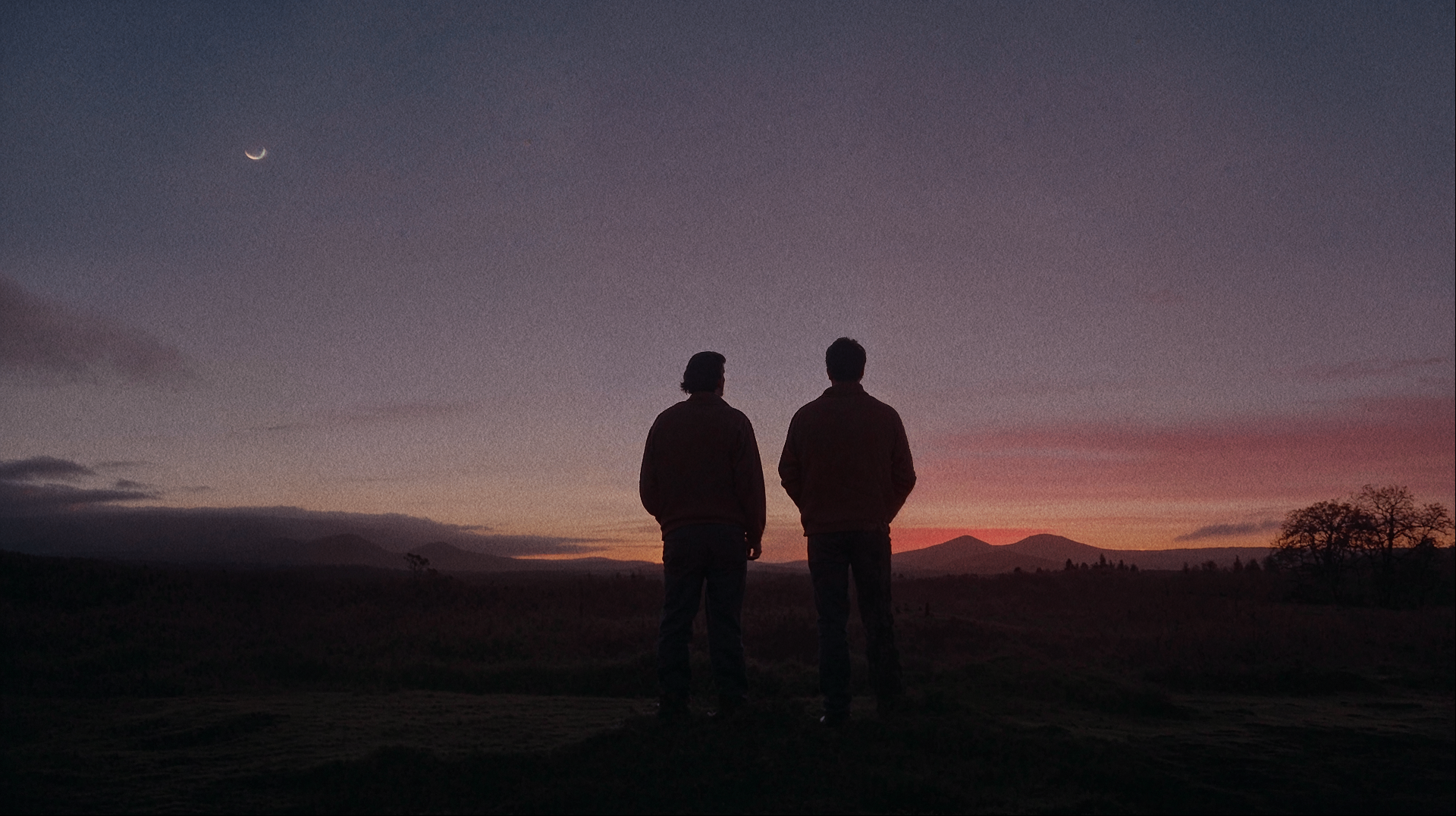
How we protect you.
Team & representation.
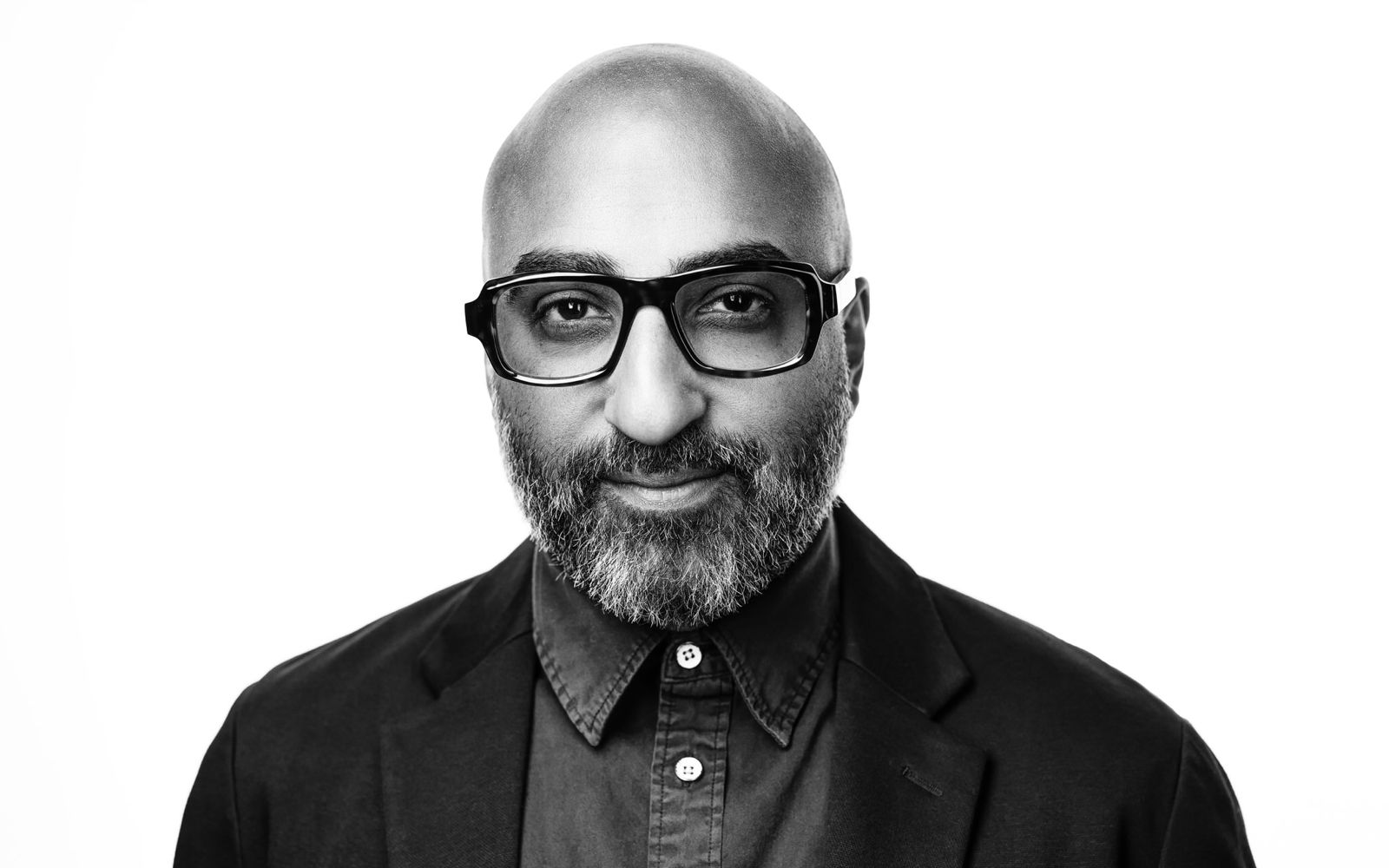
Culture.
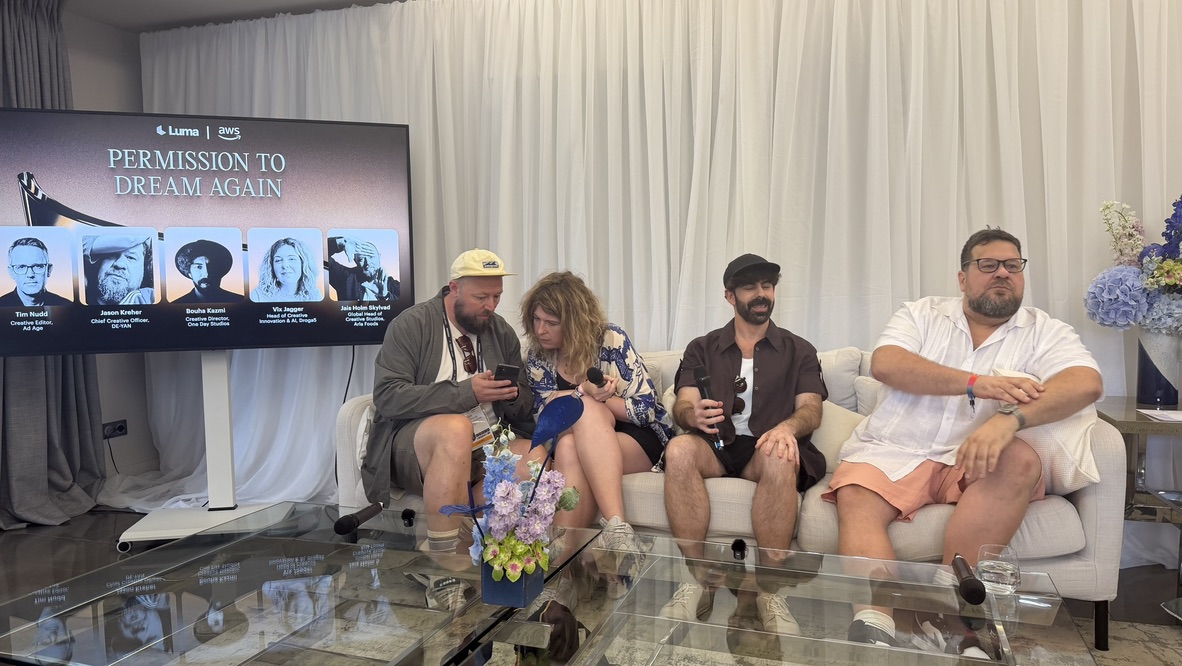
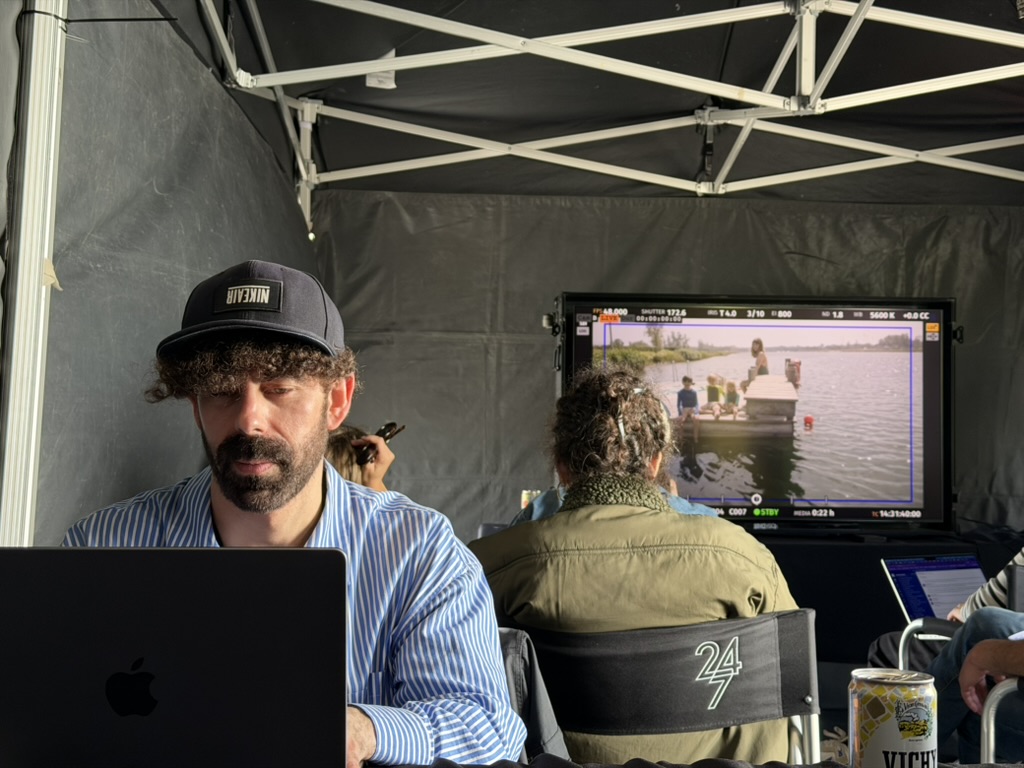
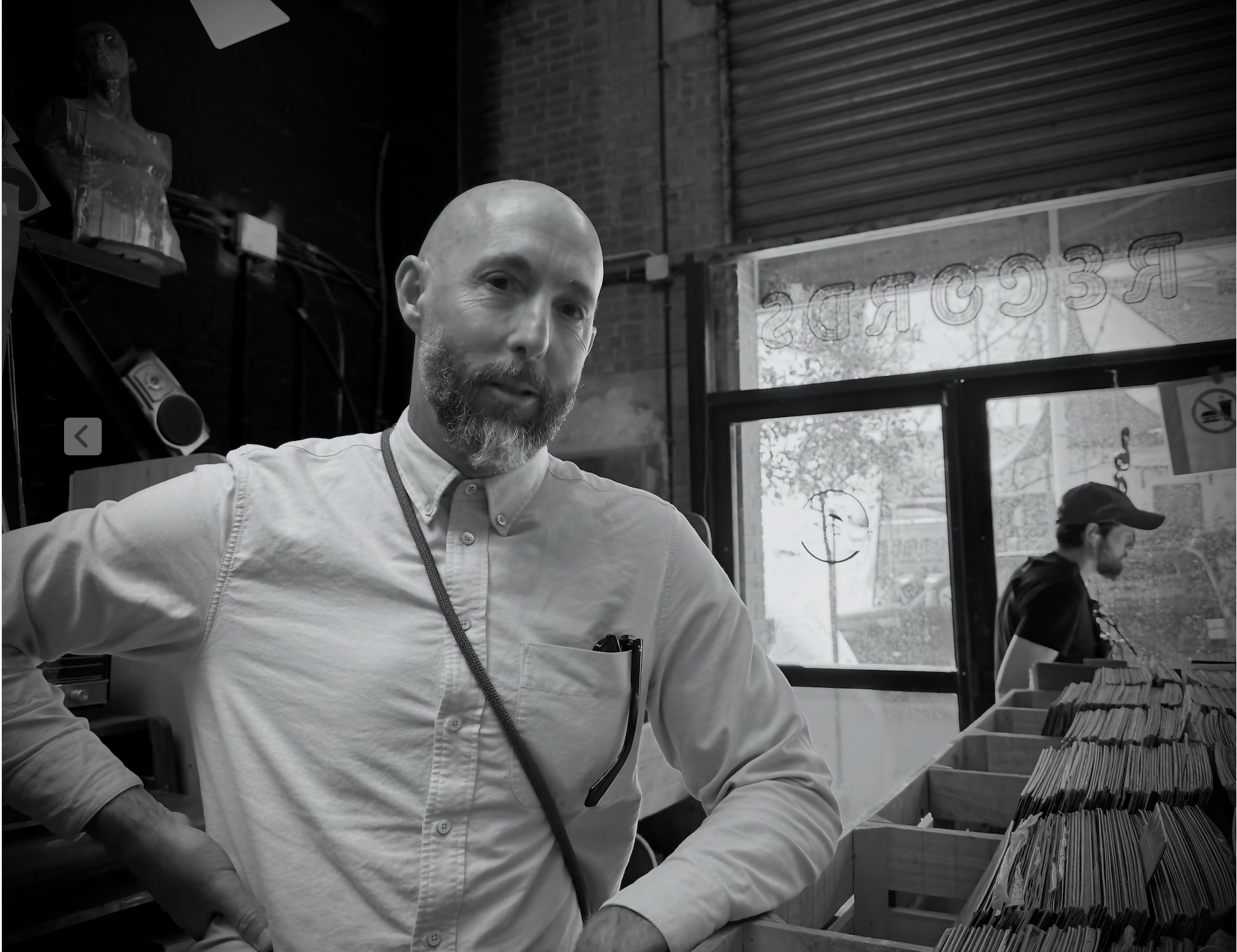
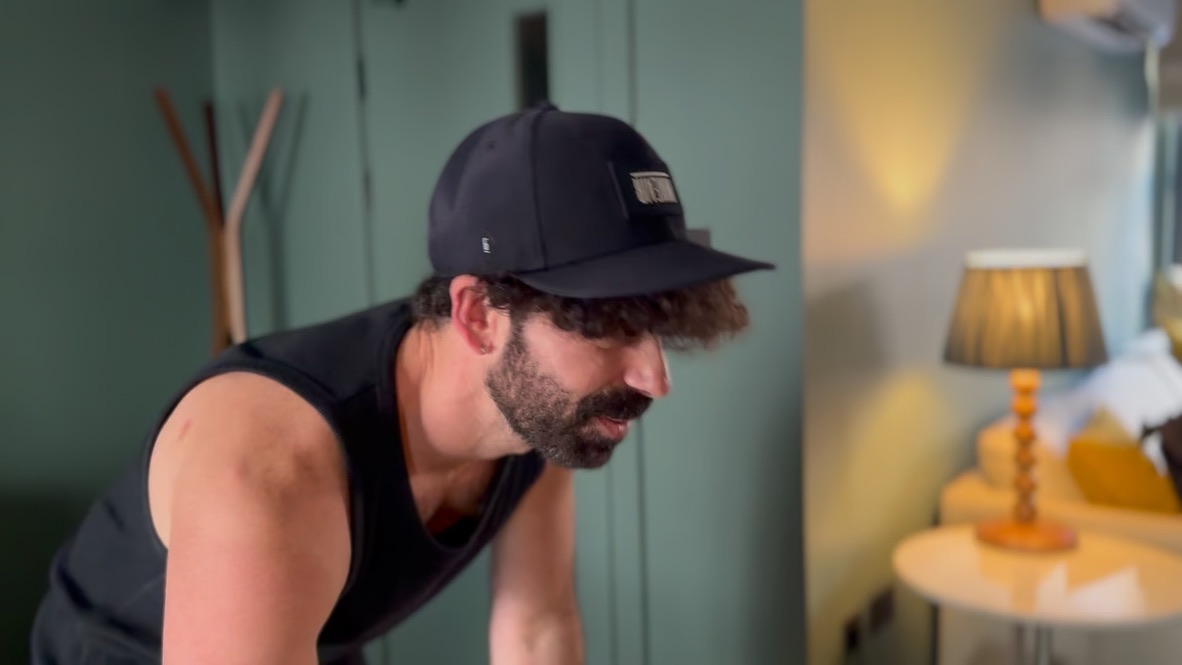
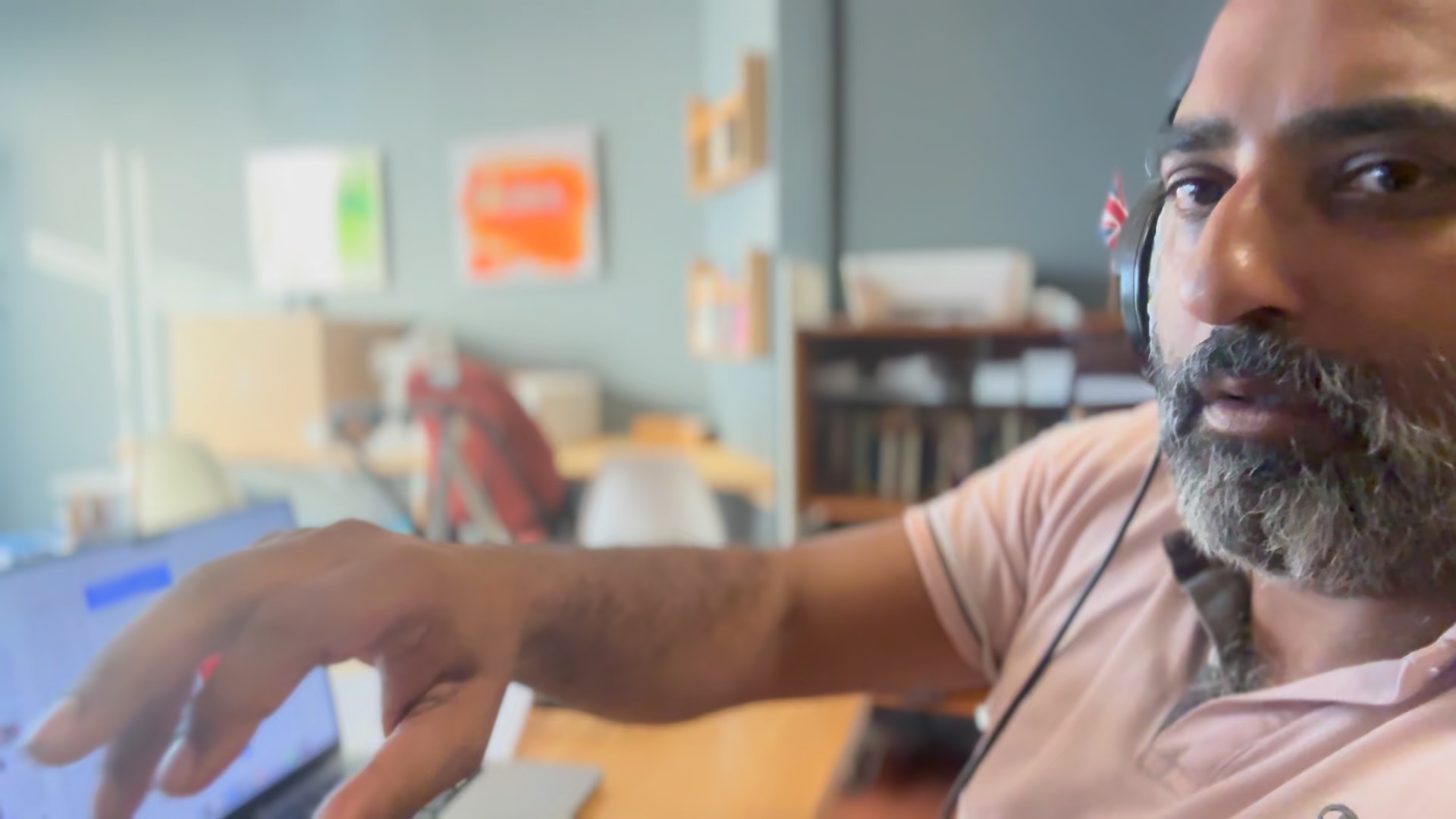
The rooms, the people and the in-between moments the work comes from.

Human at every stage.